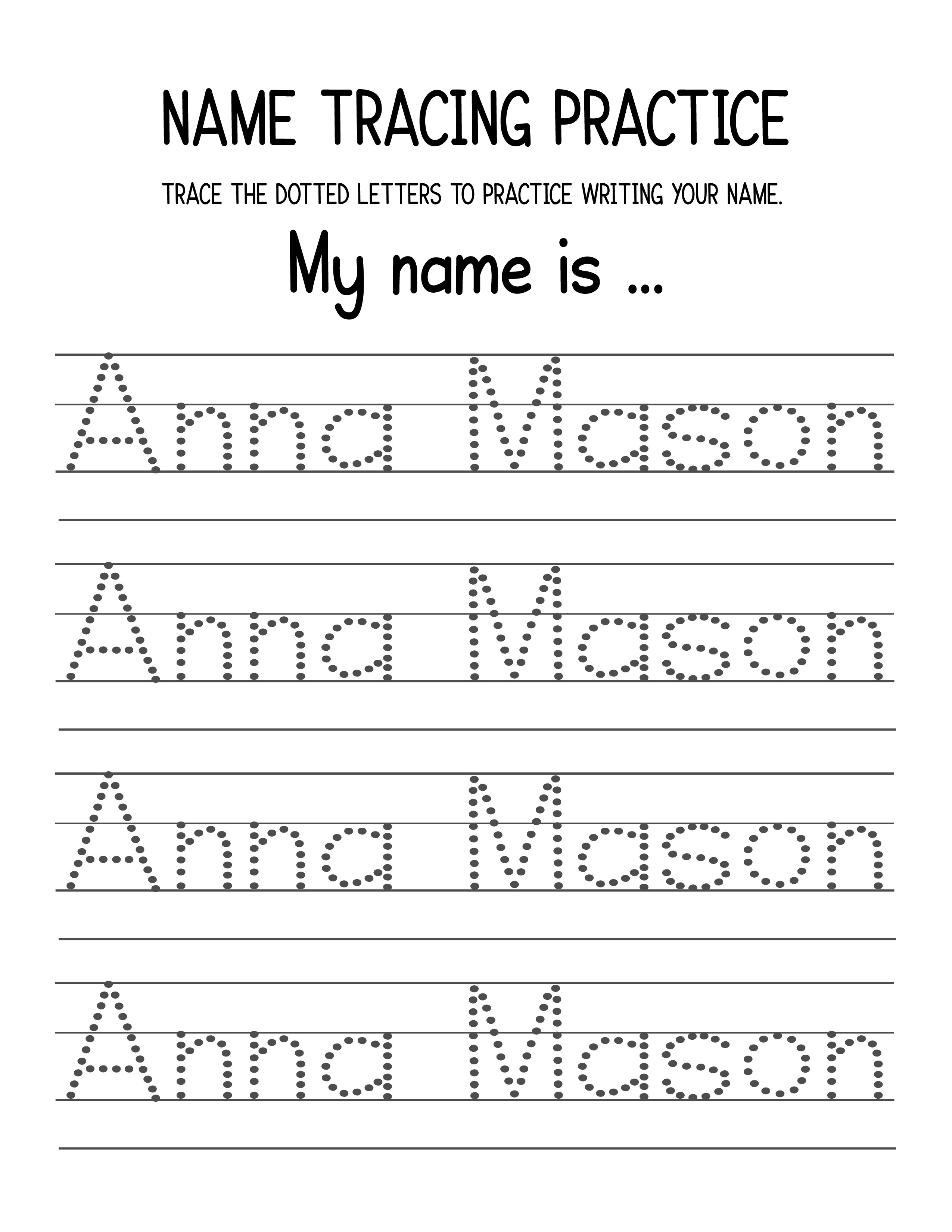


Name Writing Practice: A Powerful Learning Tool
Creating name tracing worksheets is an excellent strategy to help young learners develop their handwriting skills and gain confidence in writing their names. These worksheets offer a structured and engaging approach, making the learning process fun and effective. By providing a dedicated space for practicing name writing, these sheets cater to various age groups and learning styles, ensuring a personalized and enjoyable educational experience.
Editable handwriting sheets for kids.
Customized Worksheets for Different Learners
One of the greatest advantages of create name tracing worksheets is their adaptability. These worksheets can be tailored to suit the needs of individual learners, whether they are just starting to write their names or are ready for more advanced handwriting challenges. By adjusting the complexity of the tracing lines and incorporating different fonts and styles, educators and parents can create worksheets that progressively build upon learners' skills. This customization ensures that each child receives the right level of support and encouragement, fostering a positive attitude towards learning.
Practice name tracing and writing.
For younger children who are new to writing, simple name tracing worksheets with basic fonts and solid lines provide a great starting point. As learners gain confidence and improve their fine motor skills, the worksheets can be modified to include more intricate designs, curved lines, and even personalized elements like favorite colors or small illustrations. This progressive approach keeps the learning process exciting and motivates children to continue practicing.
More practice sheets for name writing.
Additionally, create name tracing worksheets can be designed to cater to different learning styles. Some children may benefit from worksheets that incorporate visual aids, such as pictures or symbols associated with their names. Others might prefer worksheets with a more tactile approach, featuring textures or raised lines to provide a sensory experience. By offering a variety of worksheet options, educators can accommodate diverse learning preferences and ensure that every child finds their path to success.
Free name tracing, a fun activity.
People Also Ask: How Can I Make Name Tracing Worksheets Engaging?
A common concern among educators and parents is how to make name tracing worksheets interesting and motivating for children. While the act of tracing may seem repetitive, there are several strategies to enhance engagement and make the learning experience enjoyable.
Handwriting practice with custom names.
One effective approach is to incorporate themed worksheets. By aligning the worksheets with a child's interests or a specific theme, such as animals, sports, or their favorite storybook characters, the practice becomes more exciting. For instance, a worksheet featuring a child's favorite animal, with its name written in a fun font and surrounded by related illustrations, can capture their attention and make the tracing activity feel like a game.
Pre-K name tracing, a personalized sheet.
Another way to add interest is by introducing interactive elements. Worksheets can include cut-out shapes or stickers that children can use to decorate their traced names. This not only provides a sensory experience but also allows for creativity and self-expression. Additionally, offering a variety of writing utensils, such as colorful pens, pencils, or even scented markers, can make the tracing activity more appealing and encourage children to look forward to their handwriting practice.
Alphabet and name handwriting practice.
How to Choose and Use Name Tracing Worksheets Effectively
When selecting and utilizing name tracing worksheets, there are a few key considerations to ensure they are used to their full potential. Firstly, it's important to choose worksheets that align with a child's current handwriting abilities. Worksheets that are too easy may not provide enough challenge, while those that are too difficult can be frustrating and discourage further practice. By assessing a child's skill level and selecting worksheets that offer an appropriate level of difficulty, educators and parents can ensure a balanced and motivating learning experience.
Blank name tracing, a versatile tool.
Secondly, consider the frequency and duration of practice sessions. While consistency is key, it's important not to overwhelm children with excessive practice. Short, focused sessions are often more effective and less likely to lead to burnout. By setting aside dedicated time for handwriting practice and ensuring a comfortable and distraction-free environment, children can fully engage with the worksheets and make the most of their learning opportunities.
Preschool name tracing pages.
Lastly, it's beneficial to provide positive reinforcement and feedback. Celebrating a child's progress and achievements, no matter how small, can boost their confidence and motivation. Simple praises, stickers, or small rewards can go a long way in encouraging continued effort. Additionally, offering constructive feedback and guidance can help children understand their strengths and areas for improvement, fostering a growth mindset and a willingness to learn.
Digital name tracing and writing activity.
Fun Name Activities: Beyond Tracing
While name tracing worksheets are a valuable tool, it's important to remember that handwriting practice can extend beyond the traditional worksheet format. Incorporating a variety of fun activities can further enhance a child's handwriting skills and keep learning exciting.
Name tracing worksheets for all ages.
One engaging activity is name art. Children can use different materials, such as colored pencils, crayons, or even paint, to create unique and creative representations of their names. This not only develops their fine motor skills but also encourages artistic expression and an understanding of letter formation. Another idea is to incorporate sensory play, such as using sand or rice trays to trace names with fingers, providing a tactile experience that reinforces letter recognition and formation.
For a more interactive approach, educational name tools like magnetic letters or name puzzles can be used. These hands-on resources allow children to physically manipulate letters, promoting a deeper understanding of letter shapes and sequences. Additionally, incorporating games and challenges, such as name scavenger hunts or name-themed board games, can make learning names and handwriting a fun and social experience.
By incorporating a range of activities and resources, educators and parents can create a well-rounded and enjoyable learning environment, ensuring that children develop strong handwriting skills and a positive attitude towards learning.


