




Simplifying Radicals Worksheet Answer Key Overview
Let's face it, mastering prepositions like grammar worksheet in on at can feel like trying to solve a Rubik's Cube blindfolded. You know they're important, but the rules seem arbitrary, and honestly, who has time to memorize endless exceptions? We've all been there—staring at a sentence, second-guessing whether it's "wait for me in line" or "wait for me on line," feeling like our brains are about to short-circuit.
Here's the thing: in a world where clear communication is everything, these tiny words pack a punch. Whether you're writing an email to your boss, crafting a social media post, or helping your kid with homework, getting in, on, at wrong can make you look unpolished—or worse, confuse your message entirely. And let’s be real, nobody wants to be that person who gets called out for a grammar slip-up.
So, what if I told you there’s a way to demystify these prepositions without turning your brain into mush? Stick around, and you’ll walk away with clarity, confidence, and maybe even a little pride in your newfound grammar chops. No more second-guessing, no more embarrassment—just straightforward answers that actually make sense.
The Part of Grammar Worksheets Most People Get Wrong
When it comes to mastering prepositions like in, on, at, even seasoned learners often stumble. The problem isn’t just memorization—it’s understanding the logic behind these tiny words. **Context matters more than rules**, yet most grammar worksheets treat them like math equations. Here’s the truth: "in" isn’t just for months, and "at" isn’t only for specific addresses. For example, you’d say "I’ll meet you *at* the corner," but also "I’ll meet you *in* the café." The difference? One’s a point, the other’s a space. Worksheets rarely explain this nuance, leaving students to guess instead of grasp.
Why "In, On, At" Confuse Everyone
These prepositions are chameleons—their meaning shifts based on time, place, or even culture. Take "on Monday" versus "on the weekend." The first feels natural, but why does "on the weekend" sound right while "in the weekend" doesn’t? It’s about how we perceive time chunks. **Worksheets often skip this logic**, focusing on rote examples like "at 3 PM" or "in March." But here’s what nobody tells you: English speakers rely on these prepositions to signal precision or generality. "At the station" implies a specific spot, while "in the city" is broader. Without this insight, even a grammar worksheet in on at format feels like a memory test, not a learning tool.
The Real-World Mistake That Costs You
Ever sent an email saying "Let’s meet *on* 5 PM" and cringed later? Mixing up these prepositions isn’t just a grammar slip—it’s a clarity killer. In professional settings, saying "The report is due *at* Friday" instead of "on Friday" makes you sound unsure. **The fix isn’t more worksheets**; it’s practicing with real sentences. For instance, instead of filling blanks, try rewriting sentences like "The meeting is *at* 10 AM" into "The meeting starts *at* 10 AM *in* the conference room *on* the third floor." This forces you to think about layers of context, not just isolated words.
How to Actually Master "In, On, At" Without Boring Drills
Here’s a tip: Ditch the grammar worksheet in on at format for a day and try this instead. Grab a calendar and a map. Mark events with the correct preposition, then explain *why* it fits. For example, circle "Doctor’s appointment *at* 2 PM" and note: "‘At’ because it’s a specific time point." Next, label places: "Meeting *in* the park" (a space) versus "Waiting *at* the bus stop" (a point). This visual approach makes abstract rules tangible. *And yes, that actually matters*—because grammar isn’t about perfection; it’s about clarity. So next time you hesitate between "in" and "on," pause and ask: Am I pointing to a spot, or am I inside a space?
The One Exercise That Beats Traditional Worksheets
Try this: Write a short story using "in, on, at" deliberately. For instance, "She waited *at* the café *on* Main Street *in* the heart of the city." Notice how each preposition anchors the scene differently? This exercise beats any grammar worksheet in on at format because it forces you to think like a writer, not a student. **The key is intentionality**, not repetition. After all, language isn’t a puzzle to solve—it’s a tool to use.
Your Next Step Starts Here
Mastering the nuances of grammar worksheet in on at isn’t just about acing a test or impressing your boss—it’s about communicating with clarity and confidence in every area of your life. Whether you’re drafting an email, writing a report, or even crafting a heartfelt message to a loved one, the right word in the right place makes all the difference. It’s the foundation of effective communication, and it’s a skill that stays with you forever. Think about it: every time you choose the correct preposition, you’re not just following a rule—you’re ensuring your message lands exactly as you intended.
Now, you might be thinking, “But isn’t grammar just a bunch of rules to memorize?” Not at all. It’s a tool, a way to express yourself more precisely and powerfully. And the beauty of it? Once you grasp these concepts, they become second nature. The grammar worksheet in on at isn’t just an exercise—it’s a stepping stone to fluency and confidence in your writing. So don’t let hesitation hold you back. Embrace the process, and watch how quickly it becomes effortless.
Ready to take the next step? Bookmark this page for quick reference, or share it with someone who’d benefit from a little grammar boost. Every time you practice, you’re one step closer to mastering the art of communication. And remember, the journey to better writing starts with a single word—or in this case, a single worksheet. Go ahead, give it a try, and see the difference it makes in your writing today.
Related: 16 Word Finding Worksheets for Classroom Fun
Sometimes, we all need a little extra help with our language skills, whether it's for ourselves or our kids. Word finding worksheets can be a great tool to have up our sleeves, offering a simple and effective way to practice and improve. These worksheets, like free printable word find puzzles, are a handy resource for anyone looking to sharpen their vocabulary and sentence structure.
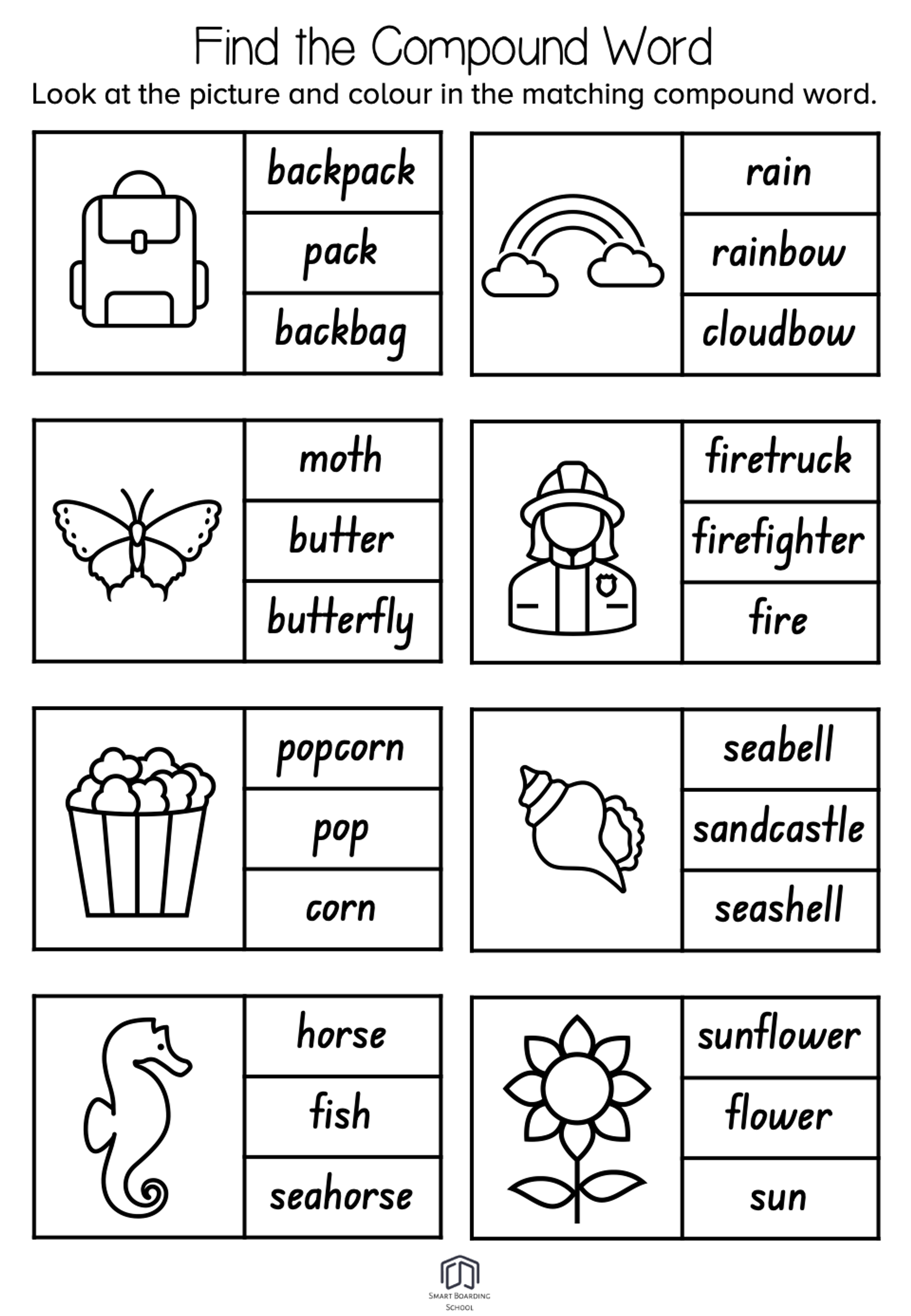
Compound words: match the pairs.
Enhancing Language Skills with Word Finding Worksheets
Word finding worksheets are an excellent resource for anyone aiming to improve their language skills, offering a structured and engaging approach to vocabulary building and sentence construction. These worksheets provide a fun and effective way to practice and enhance language abilities, making them a valuable tool for learners of all ages and levels.
Blank word search template for customization.
Word Search: A Classic Approach to Vocabulary Practice
One of the most popular and recognizable types of word finding worksheets is the classic word search puzzle. These worksheets feature a grid of letters, with hidden words waiting to be discovered. The challenge lies in scanning the grid and identifying the words, which can be arranged horizontally, vertically, or diagonally. Word search puzzles are an enjoyable way to expand vocabulary and improve word recognition skills. They are suitable for a wide range of ages and can be tailored to different difficulty levels, making them versatile for both classroom and home learning environments.
Kindergarteners: find and circle the words.
Who Benefits from Word Finding Worksheets?
Word finding worksheets cater to a diverse group of learners, including students, adults, and individuals with specific language needs. For students, these worksheets provide an interactive and engaging way to reinforce vocabulary and sentence structure, supporting their overall language development. Adults, too, can benefit from word finding worksheets, especially those looking to improve their language skills for personal or professional reasons. Additionally, word finding worksheets are valuable for individuals with language-related conditions, such as aphasia, providing targeted practice to enhance word retrieval and communication abilities.
Preschool word find: search and color.
How Can Word Finding Worksheets Be Used?
Word finding worksheets offer a flexible and adaptable learning tool that can be utilized in various educational settings and scenarios. In a classroom setting, teachers can incorporate word finding worksheets as part of their language arts curriculum, providing students with structured practice and reinforcing vocabulary and grammar concepts. For homeschooling environments, these worksheets offer a convenient and effective way to supplement language learning, allowing parents to guide their children's progress and track their language development. Tutors can also utilize word finding worksheets to provide focused and tailored language practice, catering to the specific needs and learning styles of their students.
Easy word search puzzle: fun for all.
Progression and Difficulty Levels
Word finding worksheets can be designed to cater to different skill levels, ensuring that learners can progress and challenge themselves as their language abilities improve. For beginners, worksheets may focus on basic vocabulary and simple sentence structures, gradually introducing more complex words and concepts as learners advance. Advanced learners can engage with high-level word finding tasks, exploring more sophisticated vocabulary and sentence construction, encouraging critical thinking and language precision.
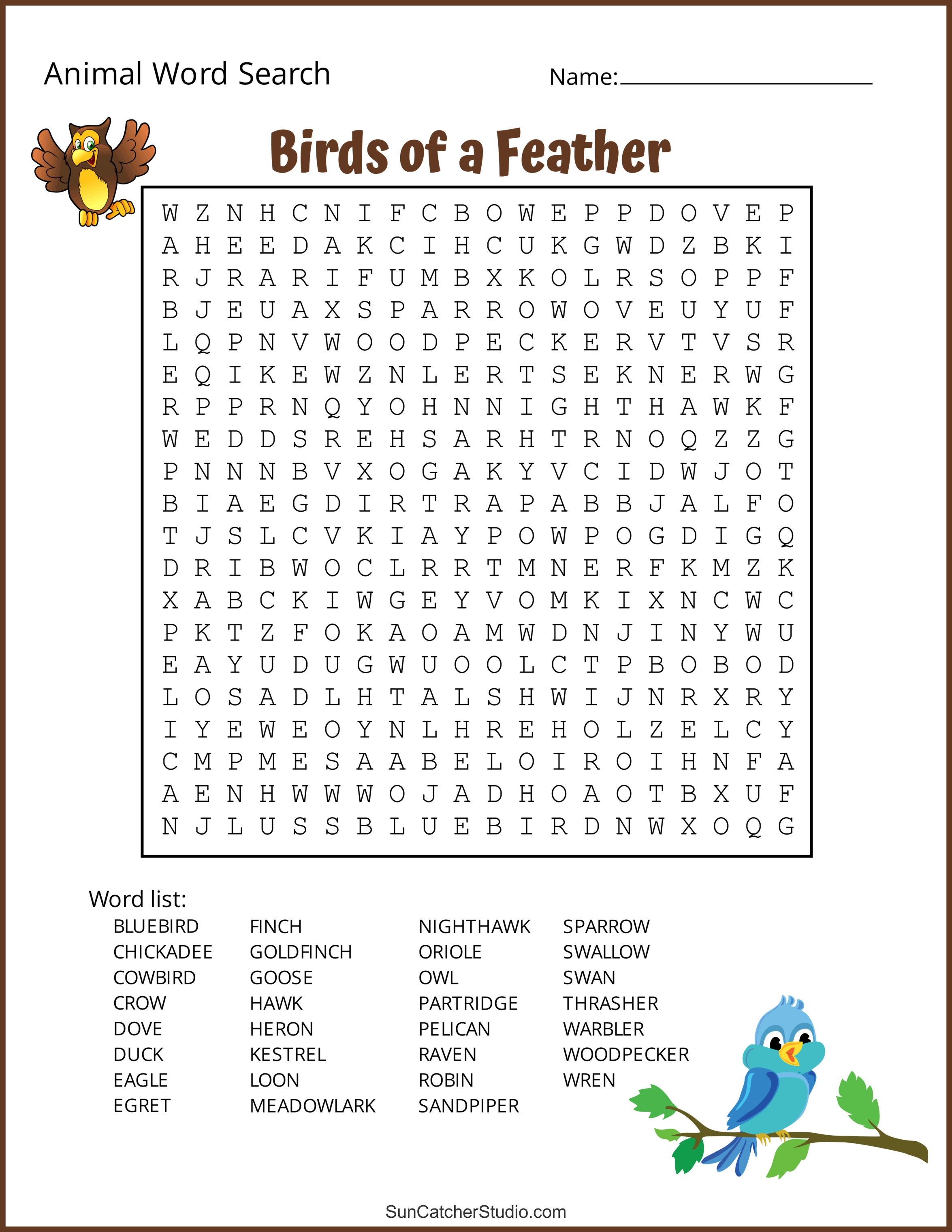
Animal-themed word search: dogs and dinosaurs.
How to Incorporate Word Finding Worksheets into Learning
Incorporating word finding worksheets into your learning routine is straightforward and flexible. You can easily find a wide variety of word finding worksheets online, including free printable word find puzzles, which can be downloaded and printed for immediate use. When selecting worksheets, consider the learner's age, grade level, and specific language goals. You can also create customized worksheets to target specific vocabulary or grammar concepts, ensuring a personalized learning experience.
Bible word search: a fun challenge.
Printing and Practical Considerations
When printing word finding worksheets, it's important to consider the quality and durability of the printouts. Opt for a printer that produces clear and sharp text, ensuring the words and letters are easily readable. For long-term use or multiple learners, consider using thicker paper or laminating the worksheets to make them more durable. This way, you can reuse the worksheets and save on printing costs. Additionally, storing the printed worksheets in a dedicated folder or binder can help keep them organized and easily accessible for future use.
Digraphs: ch sound practice.
Choosing the Right Word Finding Worksheets
When selecting word finding worksheets, it's essential to consider the learner's interests and learning style. Look for worksheets that align with their age, grade level, and language proficiency. Word finding worksheets for adults aphasia or high-level word finding tasks may be more suitable for advanced learners or those with specific language needs. For younger learners, colorful and visually appealing worksheets with engaging themes can capture their attention and make learning more enjoyable.
Kids' word search: a fun printable.
Word Association and Fill-in-the-Blanks
Word finding worksheets can incorporate various activities beyond word searches, such as word association and fill-in-the-blanks exercises. Word association tasks encourage learners to connect words and ideas, enhancing their understanding of vocabulary and relationships between concepts. Fill-in-the-blanks exercises, on the other hand, test learners' knowledge of sentence structure and word usage, providing a practical application of grammar rules. These activities offer a well-rounded approach to language practice, covering vocabulary, grammar, and sentence construction.
Free word search: find the food groups.
Progressing from Simple to Challenging
Word finding worksheets can guide learners through a progressive learning journey, starting with simple and familiar vocabulary and gradually introducing more complex words and concepts. This approach ensures that learners build a solid foundation before advancing to more challenging tasks. As learners progress, they can tackle word finding exercises with answers or word find practice sheets PDF, which provide a structured and self-guided learning experience. These resources allow learners to practice independently and track their progress, fostering a sense of achievement and motivation.
Printable word search: a classic activity.
A Fun and Effective Learning Tool
Word finding worksheets are a versatile and enjoyable learning tool, offering a range of benefits for language development. They provide a structured and interactive approach to vocabulary building, sentence construction, and grammar practice. With their flexibility and adaptability, word finding worksheets can be tailored to different learning environments, catering to the needs of students, adults, and individuals with specific language requirements. Whether used in classrooms, homeschooling, or as a personal learning resource, word finding worksheets offer an engaging and effective way to enhance language skills.
Five food groups: a healthy word find.
Final Thoughts
Word finding worksheets are a valuable addition to any language learning toolkit, providing a fun and practical way to improve vocabulary, sentence structure, and overall language proficiency. With their versatility and adaptability, these worksheets can be tailored to suit different learning styles, ages, and skill levels. Whether you're a teacher, parent, tutor, or self-guided learner, word finding worksheets offer a structured and engaging approach to language practice, making learning an enjoyable and rewarding experience.
Word finding worksheets are a brilliant, accessible tool to have in your language-learning arsenal. They're a fun and interactive way to keep your vocabulary fresh and your sentence-building skills sharp. So, why not give them a go?
Print out a few worksheets, grab a pen, and see how you get on. It's a great way to practice and improve, and you might just surprise yourself with how much you enjoy it! Leave a comment or share your experience below - we'd love to hear how these worksheets have helped you on your language-learning path.
Plant biology: find the classification terms.
Read also: 14 Mechanic Invoice Templates You Can Use
Related: Free Printable Reading Worksheets for English Practice (PDF)
You've been searching for the perfect reading english worksheets pdf for thirty minutes, and somehow every result is either too babyish or too advanced. The truth is, most free worksheets online are either boring fill-in-the-blank exercises or they're so dense they make your eyes glaze over. Honestly, it's frustrating when you just want something that actually works for the learner in front of you.
Look, I've spent years watching students struggle with reading comprehension not because they couldn't read, but because the worksheets felt like punishment. You know that moment when a kid stares at a page and you can feel their brain checking out? That's what happens when worksheets are designed by people who haven't sat in a chair next to a struggling reader. Right now, you need resources that build confidence, not just test what they don't know. And you need them in a format you can actually print and use today, not after fiddling with formatting for an hour.
What I've put together here cuts through the noise. These aren't the same recycled passages you've seen a hundred times. I'll show you how to pick the right level, where to find the hidden gems that actually engage readers, and why the best PDFs are the ones that make you forget you're even doing a worksheet. One of them even made a reluctant reader ask for "another one of those story pages" — which, if you've ever taught reading, you know is basically a miracle. Keep scrolling, because the next section changes everything about how you'll use these from now on.
If you've ever spent a Saturday morning printing worksheets for your child or students, you know the drill. You search for something that actually works, click through five sites, and end up with a stack of paper that feels more like busywork than real learning. The problem isn't the concept of worksheets. It's that most of them are lifeless. They ask kids to circle the same three sight words across forty rows, and by page two, the eyes glaze over. Here's what nobody tells you: a well-designed reading worksheet can do more than a flashy app ever will, but only if it respects the reader's time and attention.
Why Most Reading Worksheets Fail Before You Print Them
The biggest mistake I see is treating reading comprehension like a multiple-choice test. You hand a kid a short paragraph, ask three surface-level questions, and call it a day. That's not reading practice. That's compliance training. Real reading growth happens when a worksheet forces a child to hold a thought across sentences, to infer what's not written, or to notice how a character's voice changes the mood of a story. The best printable resources I've used steer clear of robotic comprehension checks. Instead, they include a brief passage that actually sounds like something a person would say, followed by a single question that demands thinking, not hunting for a word in the text. If you're looking for a reading english worksheets pdf that does this well, the ones worth your time are those that include a mix of fiction and nonfiction passages with open-ended prompts. Not fill-in-the-blank fluff.
Take vocabulary, for example. Most worksheets list ten words and ask students to match them to definitions. That's fine for memorization, but it doesn't build usable language. A better approach is to embed unfamiliar words in a short narrative, then ask the reader to rewrite the sentence using their own words. That single shift—from recognition to production—changes everything. I've seen reluctant readers actually enjoy this because it feels less like a test and more like solving a small puzzle. And when you download a solid reading english worksheets pdf that uses this method, you're not just buying time. You're building a skill that transfers to actual books.
What a High-Quality Worksheet Actually Looks Like
Let's get specific. A strong reading worksheet should have three parts: a short but complete text (150–200 words max for early readers), a vocabulary or inference task that connects directly to that text, and a quick writing prompt that asks for a personal connection or a prediction. No fluff. No clip art of smiling pencils. The layout matters too—clean, with enough white space that a child doesn't feel overwhelmed before they even start. I've tested dozens of free and paid options, and the ones that outperform the rest share a common trait: they demand active engagement on every line. Not circling. Not coloring. Thinking.
How to Choose the Right PDF Without Wasting Time
Here's a practical tip: before you download anything, preview the second page. If the second page is just more of the same format with slightly different words, skip it. The best resources vary the task structure within a single file. One page might be a short story with a sequencing activity. The next could be a nonfiction blurb about how honey is made, followed by a cause-and-effect chart. That variety keeps the brain awake. Below is a quick comparison of worksheet types I've used with actual students and what they actually deliver:
| Worksheet Type | Best For | Common Weakness |
|---|---|---|
| Phonics-based passages | Decoding practice, K–1st grade | Often ignores meaning; kids can "read" without understanding |
| Inference short stories | Critical thinking, 2nd–4th grade | Too many questions per passage; fatigue sets in |
| Nonfiction comprehension | Building background knowledge, 3rd–5th grade | Dry topics; kids lose interest by paragraph two |
| Vocabulary-in-context sheets | Word retention, all elementary grades | Definitions are often too vague or circular |
The One Thing That Makes a Worksheet Stick
After years of writing and editing educational content, I've landed on one non-negotiable: the worksheet must make the reader feel like they discovered something. Not that they completed an assignment. This sounds soft, but it's measurable. If a child finishes a reading english worksheets pdf and can tell you one new thing they learned about a topic, or one surprising detail about a character, the worksheet did its job. If they just hand it back with answers and a blank expression, it didn't. Look for resources that end with a "What do you think?" question rather than "Write the definition." That small shift is the difference between a worksheet that collects dust and one that actually teaches a child to read with purpose.
One Last Thing Before You Go
This isn’t just about finding another file to print. It’s about reclaiming those small, quiet moments where a child discovers that the squiggles on a page actually mean something. Every time you sit down with a worksheet, you’re not just teaching phonics or comprehension—you’re building a tiny bridge between confusion and confidence. That matters more than any curriculum or lesson plan. What if the next five minutes changed how a kid feels about reading?
Maybe you’re thinking, “But will my child actually sit still for this?” Or maybe you’re worried you’ll pick the wrong level and they’ll get frustrated. Here’s the truth: it’s okay if they struggle. Struggle is where the learning muscle grows. You don’t need to be a trained teacher. You just need to be present. The reading english worksheets pdf you choose today isn’t a test—it’s a conversation starter. If one page doesn’t click, toss it and try another. No harm, no guilt.
So here’s your move: bookmark this page now, or save the reading english worksheets pdf you just downloaded to your desktop. Then, later today, pick one sheet and read it together with a cup of tea or a snack nearby. If it goes well, share this resource with a friend who’s been saying they “need to get back into reading practice.” You’ve got the tool. Trust yourself to use it.


