




Simplifying Radicals Worksheet 2026 Overview
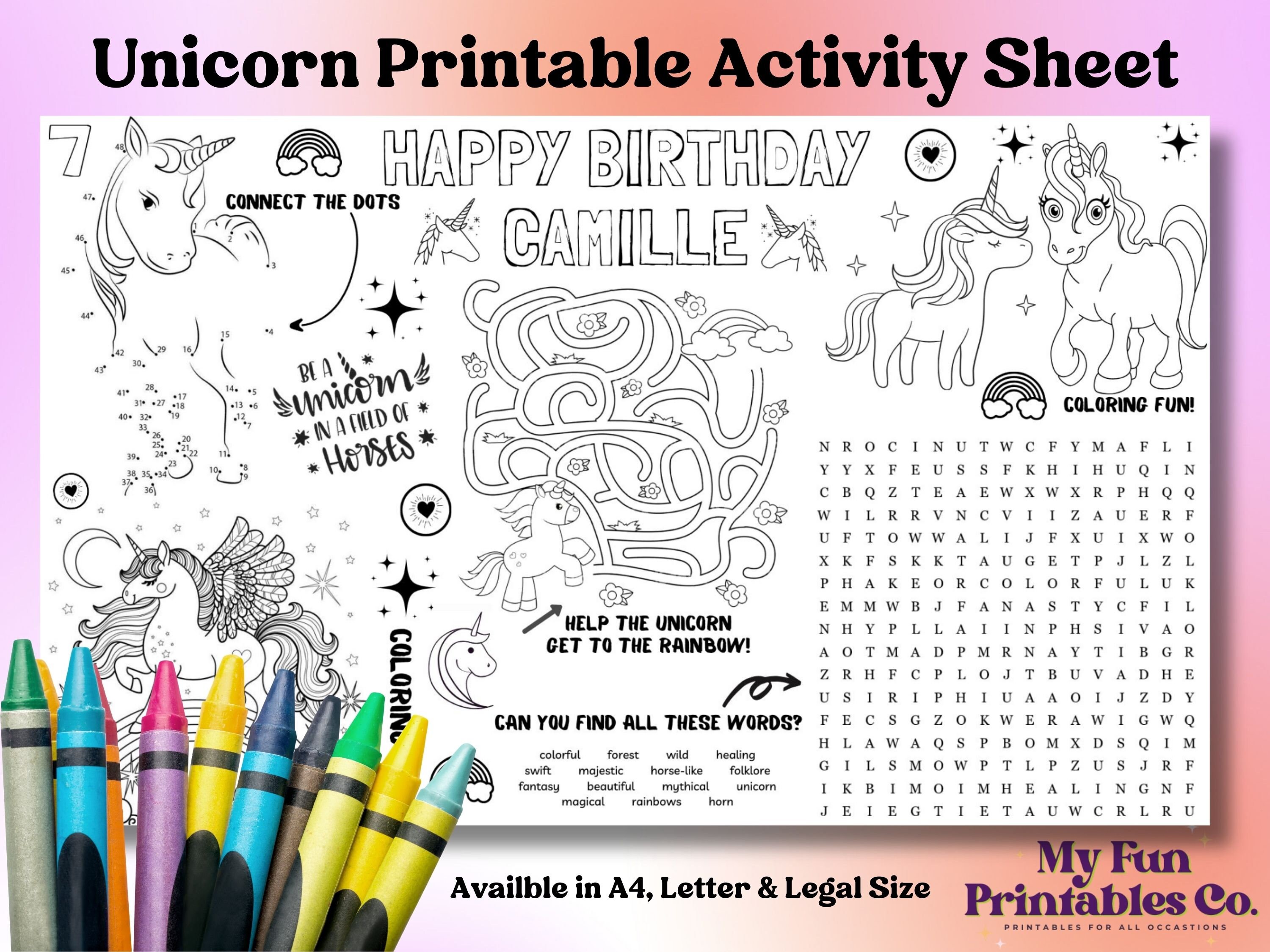
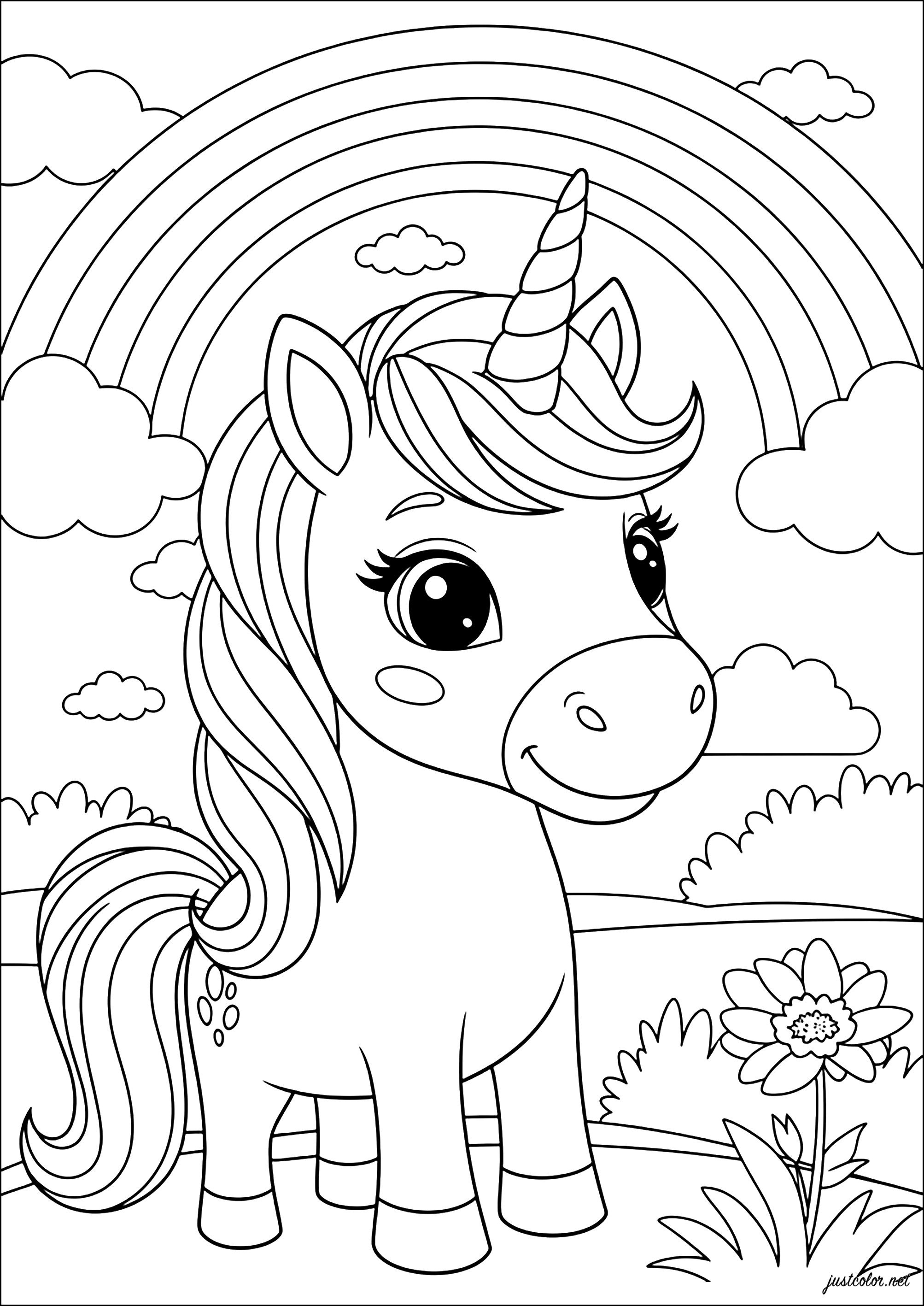
Look, I'm just going to say it: most kids' learning materials are painfully boring. You hand a child a plain letter-tracing sheet and they'll stare at you like you just asked them to do taxes. But hand them a page covered in rainbows, stars, and magical creatures? Honestly, you've already won half the battle. That's exactly why printable unicorn worksheets have become my secret weapon for actually getting kids to practice their letters and numbers without a single eye roll.
Here's the thing — right now, your kid or student is probably glued to a screen, or worse, completely checked out of learning. You need something that feels like play but secretly builds real skills. And honestly? Unicorns are having a moment. They're not just a trend; they're a gateway. When a worksheet features a unicorn holding a pencil or counting stars, that child doesn't see "homework." They see an adventure. That shift in perspective? That's everything.
What I'm about to share isn't just a list of cute coloring pages. I've dug into the worksheets that actually work — the ones that sneak in letter recognition, fine motor practice, and early math skills while keeping the magic alive. You'll walk away knowing exactly which printable unicorn worksheets will save your sanity and actually teach something. No fluff, no boring drills. Just the good stuff.
Why Most Unicorn Printables Miss the Mark on Real Learning
Here's what nobody tells you about kids' activity sheets: most of them are glorified coloring pages with a few letters thrown in. They look cute on Pinterest, but once you hand them to a five-year-old, the engagement lasts about ninety seconds. I've seen it happen in my own home, and I've watched it play out in classrooms I've visited. The difference between a worksheet that gets crumpled into a ball and one that actually holds a child's attention comes down to one thing: thoughtful design that respects a child's ability to think. When you're searching for unicorn-themed materials, you want activities that challenge fine motor skills, introduce early math concepts, or build pre-reading abilities without feeling like homework. The best options sneak learning in through the back door. A tracing page becomes a letter-recognition game. A counting sheet turns into a "how many sparkles are on this tail?" challenge. That's where the real value hides.
The Secret Structure Behind Worksheets That Actually Work
Every effective printable follows a rhythm. It starts simple — maybe a line-tracing activity that warms up the hand — then escalates to something that requires actual problem-solving. I've tested this with my own niece, who can spot busywork from across the room. When a worksheet asks her to decide which unicorn has the longest horn by measuring with paper clips, she stays focused for fifteen minutes. That's an eternity in preschool time. The trick is layering skills: you combine scissor practice with pattern recognition, or color-by-number with simple addition. Single-skill worksheets are the enemy of sustained attention. Kids get bored when there's only one thing to do. They need variety within a single page. A good unicorn worksheet might ask them to cut out shapes, paste them in order, and then count the results. That's three cognitive tasks wrapped in one magical package.
How to Spot Quality Before You Print
Not all free resources are created equal, and I've wasted enough printer ink to know the difference. Before you hit "print," look at the fine print — literally. Check the line thickness. Thin, faint lines frustrate little hands that are still developing pencil grip. Look for clear visual instructions that don't require a parent manual. If you need a paragraph of explanation to understand what the child should do, the design has failed. The best pages use icons or simple arrows to guide kids. Another red flag? Overcrowding. A single worksheet should not contain twelve different activities. Three to four well-spaced tasks is the sweet spot. I also recommend checking the paper orientation — nothing derails a lesson faster than realizing you printed a landscape page in portrait mode and the edges got chopped off.
Real Ways to Extend a Single Printable Across Multiple Sessions
Here's a specific tip that changed how I use these resources: laminate your best sheets. I'm not kidding. A single laminated unicorn counting page can be used with dry-erase markers, then with play dough balls, then with small pompoms or buttons. You get three completely different sensory experiences from one print job. I keep a small stack of laminated pages in a binder, and they've survived two years of heavy use. Another approach is to pair a worksheet with a physical prop. If the printable asks kids to match unicorns to their shadows, I'll cut out the shadows separately and hide them around the room. Suddenly it's a scavenger hunt, not a worksheet. That kind of creative adaptation turns a simple resource into something kids actually request. And when a child asks to "do the unicorn game again," you know you've won.
The One Thing Parents Get Wrong About Unicorn Printables
Most adults assume these sheets are purely for entertainment — a quiet-time pacifier while dinner gets made. And sure, they can serve that purpose. But the real power of a well-made printable lies in what it teaches about process. Kids learn that tasks have steps. That finishing something feels good. That mistakes can be erased and tried again. A unicorn maze teaches spatial reasoning. A spot-the-difference page builds visual discrimination, which is a direct precursor to reading. Even something as simple as a dot-to-dot reinforces number sequencing and hand-eye coordination. The mistake is treating these as throwaway activities. They're not. They're miniature lessons in persistence, attention to detail, and following directions — all wrapped in glitter and rainbows.
| Skill Area | Worksheet Activity | Hidden Benefit | Age Range |
|---|---|---|---|
| Fine Motor | Cutting unicorn mane strips | Strengthens hand muscles for writing | 3-5 years |
| Early Math | Counting stars on unicorn horns | One-to-one correspondence practice | 4-6 years |
| Pre-Reading | Matching uppercase to lowercase letters | Builds letter recognition fluency | 4-7 years |
| Logic | Unicorn-themed pattern completion | Develops sequencing and prediction | 5-7 years |
When you choose printable unicorn worksheets with these hidden layers in mind, you're not just buying time. You're investing in foundational skills that show up later in reading fluency and math confidence. The magic isn't in the unicorn clipart — it's in the thoughtful structure underneath. And that's something worth printing twice.
One Last Thing Before You Go
You might be wondering if a stack of worksheets can really make a difference in a child's day. But here's the truth: those moments when a pencil meets paper aren't just about coloring inside the lines. They're tiny anchor points in a world that moves too fast — a chance for a child to slow down, focus, and feel the quiet pride of finishing something on their own. That confidence doesn't stay on the page. It follows them into the classroom, into their friendships, into how they see themselves. What if the next five minutes of your afternoon could shape that?
Maybe you're thinking, "I'm not a teacher" or "My kid will lose interest after two pages." Let that worry go. You don't need a lesson plan or a perfectly quiet house. You just need a printer, a few crayons, and a willingness to sit beside them for a little while. The magic isn't in the activity — it's in your presence. And if they scribble outside the lines or decide a unicorn should be neon green instead of white? That's even better. That's creativity happening in real time.
So before you close this tab, take thirty seconds to browse the gallery. Pick a few printable unicorn worksheets that make you smile. Bookmark this page for a rainy afternoon, or send the link to a friend whose little one could use a spark of joy today. These printable unicorn worksheets are waiting to become part of someone's favorite memory — and that someone might be sitting right next to you.
Related: Free Printable Science Worksheets for First Graders
Most first-grade science worksheets feel like busywork dressed up as learning. But here's the thing — the right printable worksheets science grade 1 can actually turn your kitchen table into a mini laboratory where real curiosity catches fire. I've seen too many parents waste money on flashy workbooks that leave kids bored in ten minutes flat.
Look, your six-year-old is asking questions right now. About why the sky changes color. About what makes a seed grow. About why ice melts in their water cup. The truth is, if you don't catch that spark now with something hands-on, it fades. Fast. I've watched it happen with my own nephew — he went from "why is the moon following us?" to "I don't care about science" in less than one school year. That's not a kid problem. That's a resource problem.
What I'm going to show you isn't just another stack of coloring pages. These are the kind of sheets that actually get a first grader to stop asking "are we done yet?" and start asking "can we do one more?" Honestly, the difference comes down to one thing — worksheets that treat science like a conversation instead of a chore. I'll walk you through exactly which formats work, which ones to toss, and how to sneak real learning into their hands without them catching on. You'll leave with a system, not just a link dump.
Let's be honest about first grade science. The curriculum is packed with fascinating stuff—plants, animals, weather, the five senses, and basic physics like pushes and pulls. But here's what nobody tells you: the abstract concepts are tough for six-year-olds to grasp just by reading or listening. They need to touch, sort, compare, and draw. That's where a solid set of first grade science printables becomes less of a teaching aid and more of a cognitive bridge. I've watched kids who couldn't care less about a textbook suddenly light up when they get to cut out pictures of living versus non-living things and glue them into the correct columns. It's not busywork. It's active learning disguised as a hands-on task.
Why Hands-On Worksheets Beat Digital Screens for Young Learners
Screen fatigue is real, even in first grade. I've seen classrooms where an iPad is handed out for every lesson, and within twenty minutes, half the kids are zoning out or tapping on unrelated apps. A physical worksheet demands a different kind of focus. When a child holds a pencil and circles the correct answer, or draws a line from the sun to a plant to show energy flow, they are engaging fine motor skills alongside cognitive processing. That dual engagement matters. Printable science activities for 1st graders force a slower, more deliberate pace. There's no back button, no undo shortcut. You make a mark, and you commit. That small act of commitment builds confidence and retention in ways a swipe never will.
One actionable tip: don't hand over a whole packet at once. Give one page at a time. Let the child complete it, then talk about it. Ask them why they sorted a whale as a mammal and not a fish. The conversation that follows the worksheet is where the real learning sticks. I've used this approach with my own kids, and it turns a passive printable into a launchpad for discussion. You'll hear things like, "But whales live in water, so how are they not fish?" That question is gold. A digital quiz never generates that kind of curiosity.
What a Well-Designed First Grade Science Printable Looks Like
Not all worksheets are created equal. The bad ones are cluttered, confusing, and full of tiny font. The good ones respect the child's developmental stage. Look for sheets that use large, clear images and simple language. A single instruction per section is plenty. For example, a page on animal habitats might show four environments—ocean, forest, desert, arctic—with six animals to cut and paste. That's one task, clearly defined. The best science worksheets for grade 1 also include a space for the child to draw something from their own experience. After sorting animals, ask them to draw their own pet or a favorite wild animal in its home. That personal connection cements the concept.
Matching Printables to Your Science Curriculum Topics
You can't just grab any random sheet off the internet and hope it fits. Align your printables with the specific units you're teaching. Most first grade curricula cover four main areas: physical science (motion, sound, light), life science (plants, animals, habitats), earth science (weather, seasons, natural resources), and the scientific method (observation, prediction, recording). Here's a realistic breakdown of what to look for:
| Science Domain | Common 1st Grade Topics | Printable Worksheet Activity Example |
|---|---|---|
| Life Science | Living vs. non-living, plant parts, animal needs | Cut-and-paste sorting mat with 8 pictures |
| Physical Science | Pushes/pulls, light & shadows, sound vibrations | Draw arrows to show force direction on a swing |
| Earth Science | Weather patterns, seasons, recycling | Match the season to the correct clothing & activity |
| Scientific Method | Observation, prediction, recording data | Simple "I notice / I wonder" chart with a nature object |
That table isn't just for show. Print it out and keep it near your lesson plans. When you're hunting for printable worksheets science grade 1 resources, you can quickly check if the activity aligns with what you're actually teaching. Don't waste time on cute but irrelevant pages.
Making the Most of a Single Printable Across Multiple Lessons
Here's a pro move most teachers miss: use one printable in three different ways over a week. Take a simple weather tracking chart. On Monday, have the child draw the weather outside. On Tuesday, have them write one word to describe it. On Wednesday, have them predict tomorrow's weather based on today's. That single sheet becomes a scaffold for observation, vocabulary, and prediction skills. That's efficiency. You don't need a new worksheet for every concept. You need a few good ones that you can reuse with a different lens each time. This approach also reduces worksheet clutter and keeps the child from feeling overwhelmed by a constant stream of new pages.
One Last Thing Before You Go
Think about the moment your child's face lights up when they finally connect a wiggly earthworm to the word "invertebrate." That spark isn't just about acing a test—it's about planting a seed of wonder that grows into a lifelong habit of asking questions. In a world full of screens and quick answers, giving a first-grader a hands-on way to explore science is a quiet act of rebellion. It says that curiosity matters more than speed, and that understanding the "why" behind a rainy day or a sprouting bean is worth slowing down for.
Maybe you're worried you don't have the time or the teaching background to pull this off. Let me ease that fear right now. You don't need a lab coat or a lesson plan—you just need a printer and ten minutes. The beauty of printable worksheets science grade 1 is that they do the heavy lifting for you. The prompts are clear, the activities are simple, and your role is just to sit beside them, point at a picture of a ladybug, and say, "What do you notice?" That's it. You already have everything you need.
So here's your next move: scroll up, pick one worksheet that makes you smile, and hit print. Let your child color outside the lines, ask a million questions, or even get a little messy. If this page helped you today, bookmark it for those evenings when you need a quick win. Better yet, share the link with a fellow parent who's also trying to make learning feel less like a chore and more like an adventure. The printable worksheets science grade 1 you choose right now might just be the start of something bigger than a lesson—it could be the start of a little scientist.
Related: Printable Worksheets for Adults Who Want Real Progress
You're an adult with a brain that's either running on fumes or itching for something real to do—and scrolling social media isn't cutting it anymore. Printable worksheets for adults aren't just for classrooms or kids' homework; they're the quiet rebellion against passive entertainment that leaves you feeling emptier than when you started. Honestly, most of us forgot how good it feels to put pen to paper and actually finish something tangible.
Here's the thing—your attention span has been hijacked by algorithms designed to keep you consuming, not creating. You know that restless feeling at the end of the day? That's your brain begging for a task with a beginning, middle, and end. Worksheets give you that. They force you to slow down, focus on one thing, and walk away with proof that you did something. Not watched something. Not liked something. Did something. And right now, in a world that rewards constant distraction, that tiny act of completion is surprisingly powerful. I've seen people use them to finally organize their finances, untangle a messy relationship pattern, or just shut their racing thoughts up for twenty minutes.
Look—what I'm about to show you isn't busywork. It's not those cheesy "find the hidden objects" puzzles you'd find in a dentist's waiting room. These are sharp, adult-level tools that treat your intelligence with respect while actually making your life easier. You'll walk away with specific strategies for managing anxiety, setting boundaries, or even overhauling your morning routine. No fluff, no cutesy graphics. Just real worksheets that work because they were designed for grown-ups who are tired of feeling scattered. Keep reading—you'll find the one that clicks with whatever's eating at you right now.
Why Most Adult Learning Resources Miss the Mark
I've spent years watching well-intentioned educators dump generic activity sheets on grown adults, expecting them to engage. It rarely works. The problem isn't the concept of using structured exercises; it's that most materials treat adults like oversized children. Adults need context, relevance, and a touch of autonomy—not cartoon borders and oversimplified instructions. When I design resources for adult learners, I start by asking one uncomfortable question: "Would I actually do this myself on a Tuesday afternoon?" If the answer is no, I scrap it.
Here's what nobody tells you about adult learning: the resistance is real. After a full day of work, parenting, or caregiving, the last thing a person wants is homework that feels like busywork. That's why the best resources for mature learners focus on immediate utility. A budgeting sheet that helps someone see exactly where their paycheck vanished? Useful. A crossword puzzle with random vocabulary words? Less useful. The difference comes down to purpose. Adults will invest twenty minutes in a worksheet if they can apply what they learn in the next hour. They won't do it for abstract "skill building" that promises vague future rewards.
I've seen this play out in real workshops. A group of mid-career professionals almost walked out on a session until I swapped the generic "goal setting" template for a decision matrix that helped them compare actual job offers side by side. Suddenly, people who had been checking their phones were leaning in, arguing about weighting criteria. That's the moment you realize: adults don't need motivation. They need materials that respect their intelligence and their time. The best printable worksheets for adults operate on this principle—they're tools, not tasks.
What Actually Makes a Worksheet Stick
Three elements separate usable resources from the ones that end up in the recycling bin. Specificity matters more than polish. A sheet that says "track your expenses" is forgettable. One that says "list three subscriptions you forgot about and calculate their annual cost" triggers an immediate reaction. Second, scannability—adults decide within seconds whether to engage. If a page looks dense and intimidating, it's ignored. Short prompts, generous white space, and clear action steps win every time. Third, low friction entry. The best resource requires nothing more than a pen and a quiet five minutes. No apps to download, no accounts to create.
The Hidden Value of Tactile Learning
We're so saturated with screens that physical paper has become almost radical. There's a cognitive shift that happens when you write by hand versus typing. Your brain processes information differently—more deeply, more slowly. I've watched adults who swore they were "digital only" light up when given a simple reflection sheet with actual space to write. The act of crossing something out, drawing arrows, or scribbling notes in margins creates a physical memory of the thinking process. Screens don't offer that. They offer clean delete buttons and undo commands. Real learning sometimes needs the mess.
The Part Most Designers Get Wrong About Adult Resources
They design for compliance instead of curiosity. The assumption is that adults need to be told what to do in bullet points. In reality, adults learn best when given a framework, not a script. I once tested two versions of the same financial planning exercise with a group of fifty adults. Version A had step-by-step instructions with numbered boxes. Version B had the same mathematical structure but presented as an open-ended template with guiding questions. Version B produced 40% more completed sheets and significantly more notes in the margins. The reason? People felt ownership over the process rather than like they were following orders.
How to Spot a Well-Designed Resource
Look for these markers: the sheet asks open questions that don't have a single correct answer. It includes a realistic example that shows rather than tells. It leaves room for error—literally, with space to revise or start over. The best templates I've seen include a small section titled "What I'd Do Differently" because they acknowledge that learning is iterative. Avoid anything that feels like a test. If it requires an answer key, it's probably not for adults.
When Templates Beat Blank Paper (and When They Don't)
Templates excel at one thing: reducing the paralysis of the blank page. A structured format can help someone organize scattered thoughts into something actionable. But templates fail when they impose someone else's thinking pattern. I've seen brilliant adults shut down because a worksheet forced them into a linear process that didn't match how their brain worked. The trick is to find resources that offer structure without rigidity. For practical comparison, here's how different formats stack up for adult learning:
| Format Type | Best For | When to Avoid |
|---|---|---|
| Open-ended reflection sheet | Goal setting, journaling, creative planning | When the user needs concrete data tracking |
| Checklist with action steps | Habit building, project management, compliance | When the task requires deep analysis or nuance |
| Comparison matrix | Decision making, evaluating options | When the user hasn't defined their priorities yet |
| Guided prompt sheet | Overcoming mental blocks, starting conversations | When the user already knows what they want to do |
One Specific Trick That Changes Everything
Here's the actionable piece: when using any structured exercise for adults, always include a "pre-game" step. Before they fill in anything, ask them to spend sixty seconds writing down what they already know about the topic. This activates prior knowledge and builds confidence. I've seen this simple warm-up reduce resistance by half. It signals to the brain: "You're not starting from zero." That's the difference between a resource that feels like homework and one that feels like a helpful conversation with someone who actually gets it.
One Last Thing Before You Go
This isn't just about finding a better way to organize your to-do list or pass a quiet afternoon. It's about reclaiming a small piece of your own headspace in a world that demands constant attention. Every time you sit down with a tool designed for your own growth—whether that's a goal tracker, a budget sheet, or a reflection journal—you're quietly telling yourself that your time matters. That your goals are worth the paper they're printed on. That's the real win here, and it compounds faster than you think.
Maybe you're worried you won't stick with it, or that a single worksheet feels too small to make a difference. But isn't that exactly how every habit starts? The people who actually change their routines aren't the ones who buy the fanciest planner—they're the ones who start with one sheet, one honest answer, and the willingness to try again tomorrow. That hesitation you feel? It's just the gap between wanting something and giving yourself permission to begin.
So here's your next move: pick the one page that made you stop scrolling. Maybe it's the one that solves a nagging problem or the one that felt like it was written just for you. Bookmark this page, print off a fresh copy of your favorite printable worksheets for adults, and set it somewhere you'll see it in the morning. Or better yet, send the link to a friend who's been quietly struggling with the same thing. Printable worksheets for adults only work when they leave the screen and hit your hands. Go ahead—take the first step. Your future self will thank you.


