





Shape Worksheets Practice Overview
Ever felt like your conversations are missing that spark, leaving you wondering why connections fizzle instead of flourish? Interpersonal skills DBT worksheets might just be the secret weapon you’ve overlooked. Here’s the thing—most people think communication is innate, but the truth is, it’s a skill, and like any skill, it can be honed. These worksheets aren’t just another self-help fad; they’re grounded in Dialectical Behavior Therapy, a proven method to navigate emotions and relationships with precision.
Right now, in a world where screens dominate and misunderstandings pile up, mastering interpersonal skills isn’t just nice—it’s necessary. Whether it’s diffusing tension at work, deepening bonds with loved ones, or simply feeling heard, the stakes are higher than ever. You’re not alone if you’ve felt frustrated by miscommunications or walked away from conversations feeling drained. These tools are designed to bridge that gap, giving you actionable strategies to respond, not just react.
Stick around, and you’ll discover how these worksheets can shift your interactions from surface-level exchanges to meaningful connections. No fluff, no empty promises—just practical insights that stick. (And yes, even that one awkward family dinner might become bearable.)
The Hidden Challenge in Mastering Interpersonal Skills
When it comes to improving how we connect with others, most people focus on what to say or how to act. But here’s the part nobody talks about: **emotional regulation is the backbone of effective communication**. Without it, even the best-intentioned words can fall flat or, worse, cause harm. This is where interpersonal skills DBT worksheets come in—not as a magic fix, but as a structured way to practice mindfulness and emotional control in real-world scenarios. Think of it like this: you wouldn’t run a marathon without training, so why approach difficult conversations without preparation?
Why Emotional Regulation Matters More Than You Think
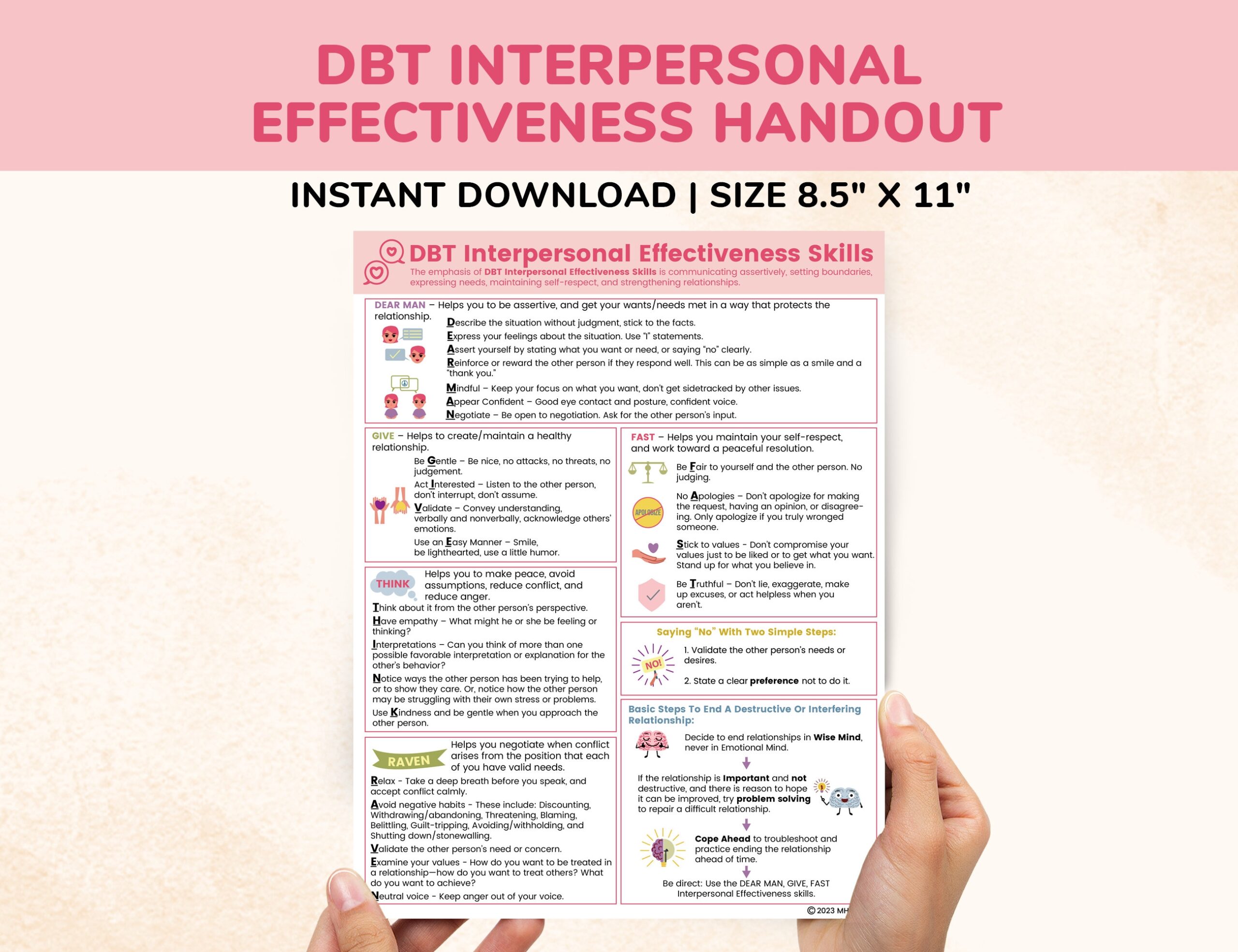
Ever walked away from a conversation feeling misunderstood or frustrated? Chances are, emotions hijacked the interaction. DBT worksheets emphasize recognizing emotional triggers before they escalate. For instance, a simple disagreement can turn into an argument if one person feels attacked. By practicing skills like "DEAR MAN" (a DBT technique for assertive communication), you learn to express needs clearly without letting emotions cloud the message. **It’s not about suppressing feelings—it’s about channeling them constructively.**
The Role of Active Listening in Building Trust
Here’s a relatable truth: most of us are terrible listeners. We’re often just waiting for our turn to speak. DBT worksheets include exercises that force you to pause and truly hear the other person. One actionable tip? Try the "GIVE" skill: Be **Gentle**, show Interest, Validate, and use an Easy manner. For example, instead of jumping in with advice, say, "That sounds really tough. I can see why you’d feel that way." This small shift builds trust and opens the door for deeper connection.
Common Mistakes People Make with DBT Worksheets
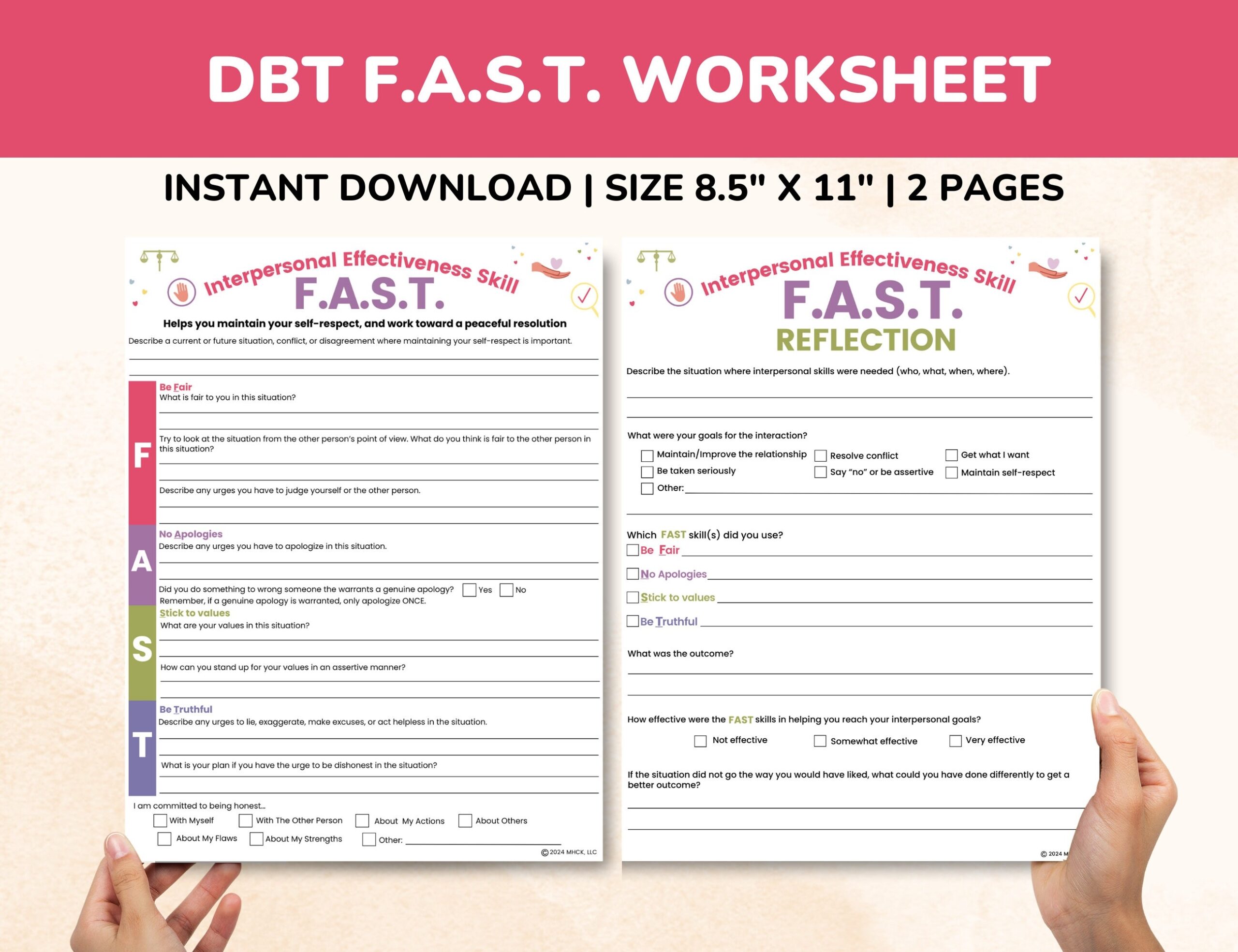
While interpersonal skills DBT worksheets are powerful tools, they’re often misused. A common mistake is treating them as a one-time exercise rather than an ongoing practice. **Consistency is key—think of it as brushing your teeth, not taking a single antibiotic.** Another pitfall is skipping the self-reflection prompts. These aren’t just filler questions; they’re designed to uncover patterns in your behavior. For instance, if you consistently avoid conflict, a worksheet might ask, "What’s the worst that could happen if you express your needs?" Answering honestly can reveal fears you didn’t know were holding you back.
How to Avoid Overthinking During Practice
One of the biggest barriers to using DBT worksheets effectively is overthinking. You might worry about saying the "right" thing or fear judgment. Here’s a practical approach: Start with low-stakes situations. Practice active listening with a friend or use role-playing scenarios to rehearse difficult conversations. Over time, this builds confidence for real-life interactions. Remember, the goal isn’t perfection—it’s progress.
When to Use Worksheets vs. Real-Life Practice
While worksheets are great for building skills, they’re just one piece of the puzzle. Real-life practice is where the rubber meets the road. Use worksheets to prepare, but don’t rely on them as a crutch during actual conversations. For example, if you’re planning a tough talk with a coworker, fill out a DBT worksheet beforehand to clarify your goals and emotions. Then, during the conversation, focus on being present and flexible. **It’s the balance between preparation and spontaneity that makes all the difference.**
Your Next Step Starts Here
In the grand scheme of life, work, and relationships, mastering interpersonal skills dbt worksheets isn’t just about ticking a box—it’s about unlocking doors to deeper connections, smoother collaborations, and a more fulfilling existence. Think about it: every conversation, every interaction, is an opportunity to either build or break trust. By applying what you’ve learned here, you’re not just improving skills; you’re investing in a version of yourself that thrives in every corner of life. Whether it’s acing that job interview, resolving a family conflict, or simply being more present with friends, these tools are your secret weapon for meaningful change.
Now, what if you’re still wondering if this is really for you? Here’s the truth: growth always feels a little uncomfortable at first. But that’s where the magic happens. These worksheets aren’t about perfection—they’re about progress. Even small steps, like practicing active listening or setting boundaries, can lead to big shifts over time. So, let go of the pressure to get it “right” and focus on showing up authentically. You’ve got this.
Before you go, take a moment to bookmark this page or share it with someone who could benefit from this journey. Dive into the interpersonal skills dbt worksheets gallery, pick one that resonates, and start today. Every great relationship—with others and yourself—begins with a single step. Why not make it now?
Related: Free Printable K and G Speech Therapy Worksheets (PDF)
Speech therapy can feel like a maze, especially when you're trying to help a child master sounds like k and g speech therapy worksheets become your secret weapon. Honestly, it's not just about the worksheets—it's about finding the right tools that make learning feel less like a chore and more like a game. But let’s face it, not all resources are created equal, and sifting through the noise to find what actually works can be exhausting.
Right now, you’re probably juggling a million things—work, family, maybe even your own sanity—and the last thing you need is another generic solution that doesn’t stick. Kids learn best when they’re engaged, and if the materials aren’t grabbing their attention, progress stalls. That’s where the right worksheets come in, but only if they’re designed with both fun and function in mind. Otherwise, you’re just spinning your wheels.
Look, I get it—you want results, and you want them fast. The good news? You’re about to discover how to turn speech practice into something your child actually looks forward to. Stick around, and you’ll see why the right approach can make all the difference.
The Part of K and G Speech Therapy Worksheets Most People Get Wrong
When it comes to speech therapy resources, k and g speech therapy worksheets are often overlooked or misused. Many assume these worksheets are just for kids, but here’s what nobody tells you: they’re incredibly versatile and can be adapted for all ages. The mistake most people make is treating them as a one-size-fits-all solution. **Context matters**, and without tailoring these worksheets to the learner’s needs, they can fall flat. For instance, a 5-year-old struggling with articulation will engage differently than an adult recovering from a stroke. The key is to pair these worksheets with interactive activities to keep the learner engaged and motivated.
Why Age-Appropriate Adaptation is Crucial
One of the biggest pitfalls is ignoring the developmental stage of the learner. A worksheet designed for a child might include colorful pictures and simple sentences, while an adult version could incorporate real-life scenarios or professional vocabulary. For example, a child might practice saying "kite" or "goat," while an adult could focus on phrases like "key meeting" or "grocery list." This small adjustment makes a huge difference in effectiveness. Without it, the worksheet becomes just another piece of paper, not a tool for progress.
The Role of Consistency in Speech Therapy
Another overlooked aspect is **consistency**. Speech therapy isn’t a one-and-done deal. Worksheets are most effective when used regularly, not as a last-minute cram session. Incorporate them into a daily routine, even if it’s just 10 minutes. For instance, pair a worksheet with a morning coffee or bedtime routine. This habit-building approach ensures steady progress. *And yes, that actually matters*—sporadic practice often leads to frustration and slower results.
How to Make K and G Worksheets Actually Work for You
To get the most out of k and g speech therapy worksheets, think beyond the page. Combine them with real-world practice. For example, after practicing the word "gate," take a walk and point out gates in the neighborhood. This bridges the gap between theory and application. **Actionable tip**: Use a mirror during practice to help learners visualize their mouth movements. This simple addition can significantly improve articulation.
Pairing Worksheets with Technology
In today’s digital age, combining worksheets with speech therapy apps can amplify results. Apps often provide instant feedback, which worksheets alone can’t offer. For instance, after completing a worksheet, use an app to record and analyze pronunciation. This hybrid approach keeps learners engaged and provides a well-rounded practice experience.
Customizing Worksheets for Specific Challenges
Not all speech challenges are created equal. Some learners struggle with the "k" sound, while others find "g" harder. Customize worksheets to focus on the specific sound causing difficulty. For example, create a list of "k" words for one session and "g" words for another. This targeted approach ensures that practice time is spent efficiently, addressing the root of the problem rather than taking a scattershot method.
- Pair worksheets with real-life objects for tactile learning.
- Use a mirror to improve visual feedback during practice.
- Incorporate technology for instant pronunciation analysis.
Your Next Step Starts Here
Mastering speech sounds like /k/ and /g/ isn’t just about clarity—it’s about confidence. Whether you’re a parent supporting your child’s development, a therapist guiding clients, or an adult working on your own speech, progress in this area ripples into every conversation, every connection. It’s about being heard, understood, and fully present in the moments that matter most. That’s why the tools you’ve just explored are more than just exercises; they’re stepping stones to a more expressive, confident version of yourself or the person you’re helping.
You might be thinking, “But will it really make a difference?” Here’s the truth: consistency is key, and even small, intentional efforts add up. These aren’t just worksheets—they’re opportunities to practice, reinforce, and celebrate progress. Every repetition, every sound mastered, is a win. So, let go of any doubt and trust the process. You’ve got this.
Ready to take the next step? Browse the gallery of k and g speech therapy worksheets, bookmark this page for easy access, or share it with someone who could benefit. Every little bit of practice counts, and you’re already on the right path. Keep going—your voice deserves to be heard, loud and clear. And if you’re looking for more, remember: k and g speech therapy worksheets are just the beginning of a journey toward greater confidence and connection.
Related: Free Printable Reading Labels Worksheets for Kids
You've stood in a grocery aisle squinting at a nutrition panel, trying to remember if 12 grams of sugar is good or bad, and then just gave up and tossed the box in your cart. Here's the thing — that moment of confusion is costing you more than you think. Most people can't actually read a label correctly, and food companies bank on that confusion.
Right now, with ultra-processed foods taking up 60% of the average American diet, knowing how to decode a label isn't just useful — it's a basic survival skill. But reading labels worksheets aren't just for school kids or dietitians anymore. They're the cheat code adults need to stop being manipulated by serving sizes designed to make sugar look harmless and fat content seem low. Look — if you've ever been shocked by how much salt is in your "healthy" soup, you already know the system is rigged.
What if you could glance at any package and instantly spot the marketing tricks? That's exactly what happens when you work through a few well-designed worksheets. You stop guessing and start seeing the hidden numbers that matter — like added sugars hiding under sixteen different names. The truth is, once you train your brain to scan for a few specific red flags, you'll never read a label the same way again. And honestly, you'll be annoyed at how long you've been fooled.
Let me be blunt: most people treat nutrition labels like a novel written in a foreign language. They glance at the calories, maybe check the sugar, and toss the package back. That's not reading. That's guessing. And guessing is why so many "healthy" purchases are anything but. The real skill isn't just looking at the label—it's knowing which numbers actually matter for your specific goals. Whether you're managing blood pressure, building muscle, or simply trying to cut through the marketing fluff, you need a systematic approach. That's where structured practice comes in, and yes, using reading labels worksheets can train your brain to spot the tricks food companies play.
Why Your Brain Skips the Most Critical Line on the Label
Here's what nobody tells you: the serving size is the single most manipulated number on any package. I've seen a "low-calorie" granola that lists a serving as 28 grams—about a quarter cup—when the average person pours triple that into a bowl. The label looks innocent. The math is brutal. And that's the point. Food manufacturers know you won't do the multiplication. They count on it. A bag of chips might show 140 calories per serving, but the bag contains four servings. You eat the bag. You consume 560 calories. The label didn't lie. It just didn't help you.
This is where deliberate practice changes everything. When you work through structured exercises—comparing actual portion sizes to listed servings, recalculating totals, and identifying hidden sugars under aliases like "evaporated cane juice"—you develop a reflex. You stop trusting the front of the box and start interrogating the back. The best reading labels worksheets force you to do this math until it becomes automatic. After a few rounds, you'll catch a 2.5-serving "snack" bag before it catches you.
The Hidden Math Most Shoppers Never Do
Let me give you a specific example that changed how I shop. I grabbed two jars of pasta sauce last week. One claimed "70% less sodium." The other said "no salt added." Sounds similar, right? Wrong. The first sauce used potassium chloride to replace salt—still 480mg of sodium per half-cup. The second had 95mg. That's a fivefold difference hidden behind similar marketing phrases. A good worksheet exercise will have you compare these side-by-side, calculating the percentage difference and identifying which claim is actually meaningful. This isn't about memorizing numbers. It's about learning to see through the language.
What a Real Comparison Looks Like (Not Generic Advice)
Stop reading vague tips. Here is an actual breakdown of three common "healthy" crackers I analyzed using a structured label approach. The differences will surprise you.
| Brand | Claim | Actual Fiber | Added Sugar | Real Serving (g) |
|---|---|---|---|---|
| Brand A | "Whole grain" | 3g | 4g | 30g (about 8 crackers) |
| Brand B | "Gluten-free" | 0g | 6g | 28g (about 6 crackers) |
| Brand C | "Organic" | 1g | 2g | 32g (about 10 crackers) |
Brand A looks best on fiber, but Brand C actually gives you more crackers for fewer grams of added sugar. The "gluten-free" option is the worst on both counts. That's the kind of insight you can't get from a headline. You have to dig into the fine print.
Building a System That Sticks
The mistake most people make is trying to learn everything at once. They grab a worksheet, try to evaluate twenty nutrients, and give up by the third item. Don't do that. Start with just two metrics: serving size versus what you'll actually eat, and added sugar versus total sugar. Master those for a week. Then add fiber-to-carb ratio. Then sodium. Each new layer builds on the last. I've seen people go from label-illiterate to spotting deceptive packaging in under two hours of focused worksheet practice. The key is repetition with real packages—not theoretical examples. Pull something from your pantry right now. Read the serving size. Double it. Ask yourself: would I still buy this?
One Last Thing Before You Go
You’ve just spent time learning something that most people overlook until it’s too late. But here’s the truth: knowing how to read a label isn’t just about avoiding bad ingredients—it’s about reclaiming control over your health, your family’s habits, and the messages that food companies feed you every single day. Every time you scan a package with confidence, you’re not just shopping; you’re voting for transparency and choosing to nourish your body on your own terms. That small act compounds into real, lasting change.
Maybe you’re thinking, But what if I forget what to look for when I’m standing in the aisle? That hesitation is normal—and it’s exactly why tools like reading labels worksheets exist. They’re not busywork; they’re your cheat sheet for real life. Print one, keep it in your wallet, or snap a photo on your phone. The goal isn’t perfection—it’s progress. You already know more than you did ten minutes ago, and that knowledge is yours to keep.
Now, take the next step that feels right for you. Browse our gallery of ready-to-use reading labels worksheets to find one that fits your routine. Bookmark this page so you can return anytime you need a refresher. And if a friend or family member has ever asked you, “How do you know what’s healthy?”—share this with them. You’ve got the tools. Go ahead and use them.


