I've always found geometry to be a tricky subject, especially when it comes to identifying different types of lines. It's not just about drawing straight lines; there's a whole lot of precision and understanding involved. That's why I think the parallel & perpendicular lines worksheet is such a handy tool. It's a simple yet effective way to practice and master this skill, and it's not just for kids - adults can benefit from it too! I mean, who doesn't want to feel confident about their geometry skills? By the way, if you're looking for more practice, you might want to check out some fact family worksheets, like these 23 Fact Families Worksheets for Kids.
Practice identifying line types.
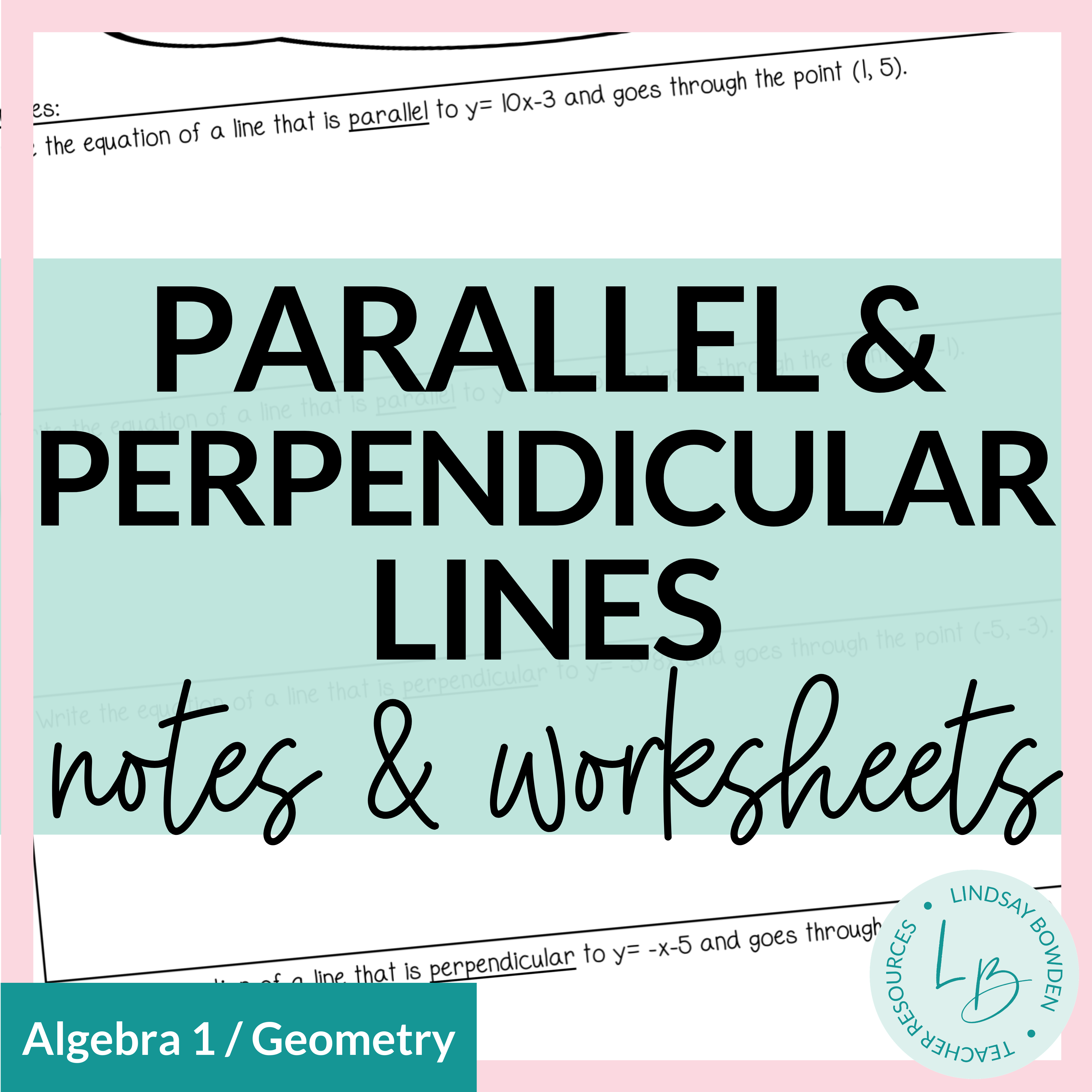
Parallel & Perpendicular Lines: Mastering the Basics
One of the fundamental concepts in geometry is understanding the relationships between lines and angles. The parallel & perpendicular lines worksheet is an excellent resource for anyone looking to strengthen their foundation in this area. Whether you're a student, teacher, or parent, this worksheet offers a structured and engaging way to explore these essential geometric concepts.
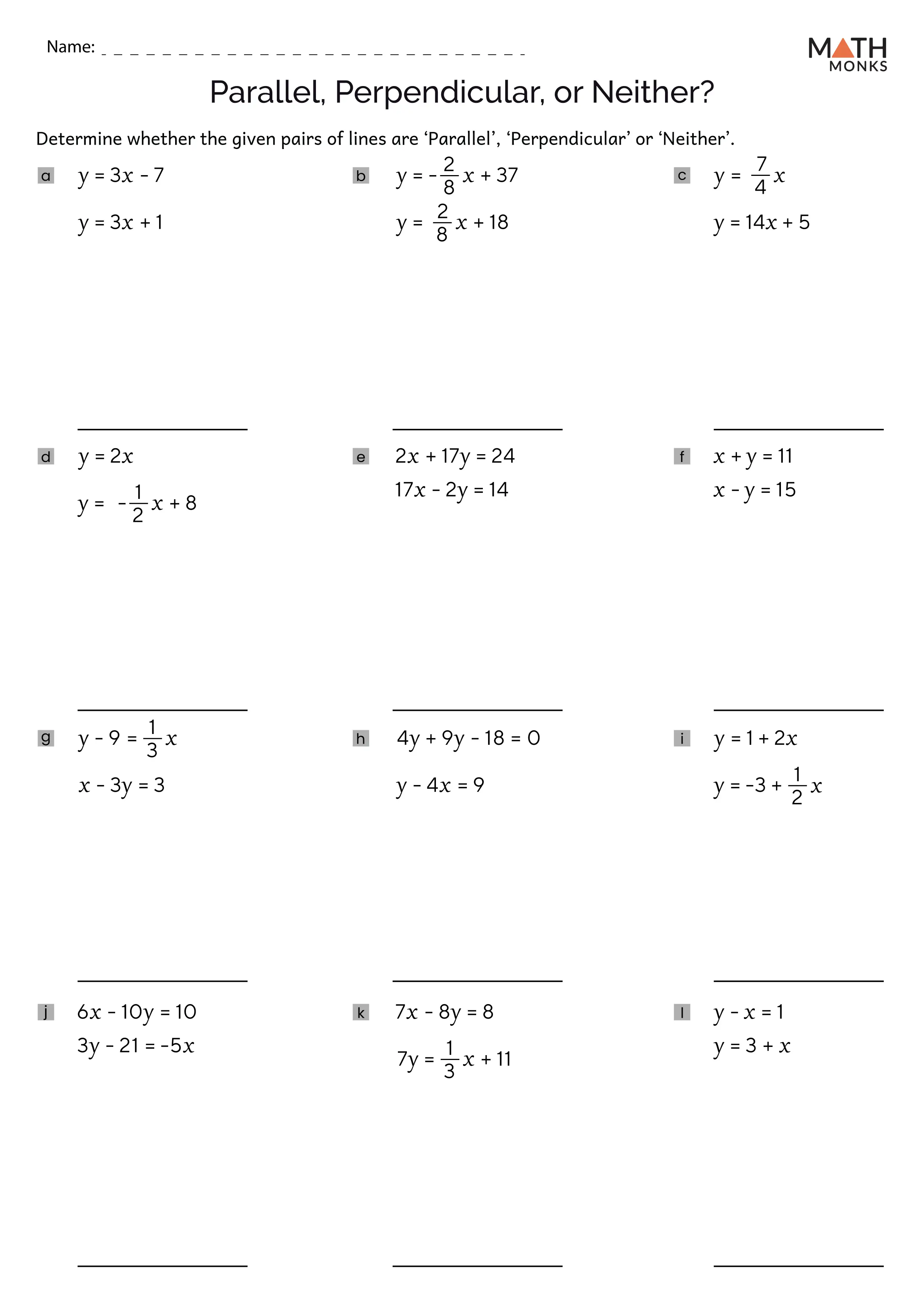
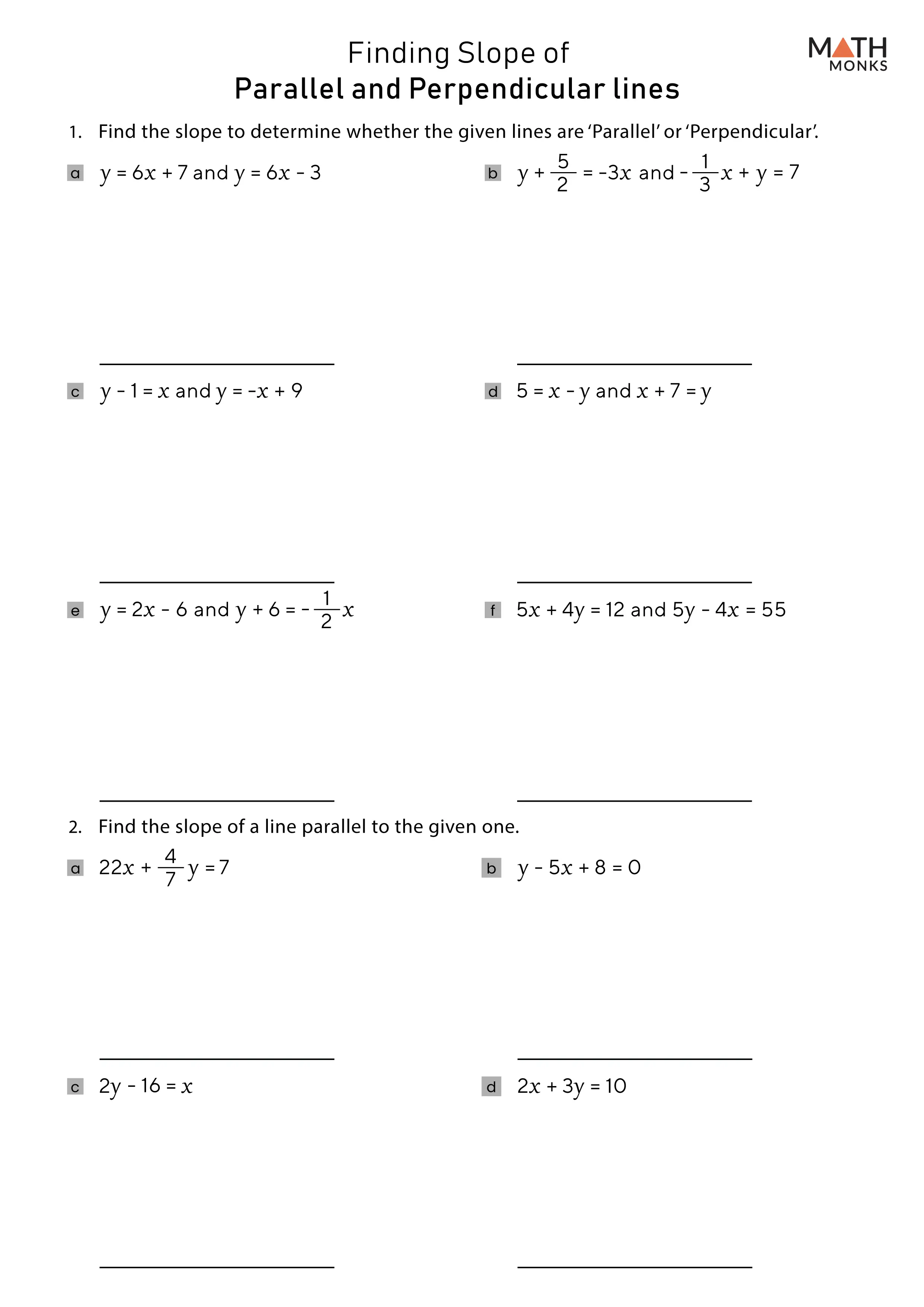
Math Monks: line slopes practice.
Beyond Straight Lines: Exploring Line Relationships
While drawing straight lines might seem simple, the real challenge lies in understanding the intricate relationships between different types of lines. The parallel & perpendicular lines worksheet goes beyond basic drawing skills, delving into the world of line symmetry, angle relationships, and parallel identification. By working through this worksheet, learners can develop a deeper understanding of how lines interact and the unique properties that define them.
More practice with line slopes.
This worksheet is particularly useful for students who are just beginning to explore geometry. It provides a solid foundation for understanding more complex concepts later on, such as intersecting lines, transversal lines, and the fascinating world of opposite angles. By mastering the basics, learners can build a strong geometric foundation that will serve them well throughout their academic journey.

Equations for parallel and perpendicular lines.
How Do Parallel & Perpendicular Lines Work?
A common question that arises when working with these worksheets is, "How do we identify parallel and perpendicular lines, and what makes them unique?" The answer lies in understanding the precise definitions and visual cues associated with these line types.

Identify lines from a graph.
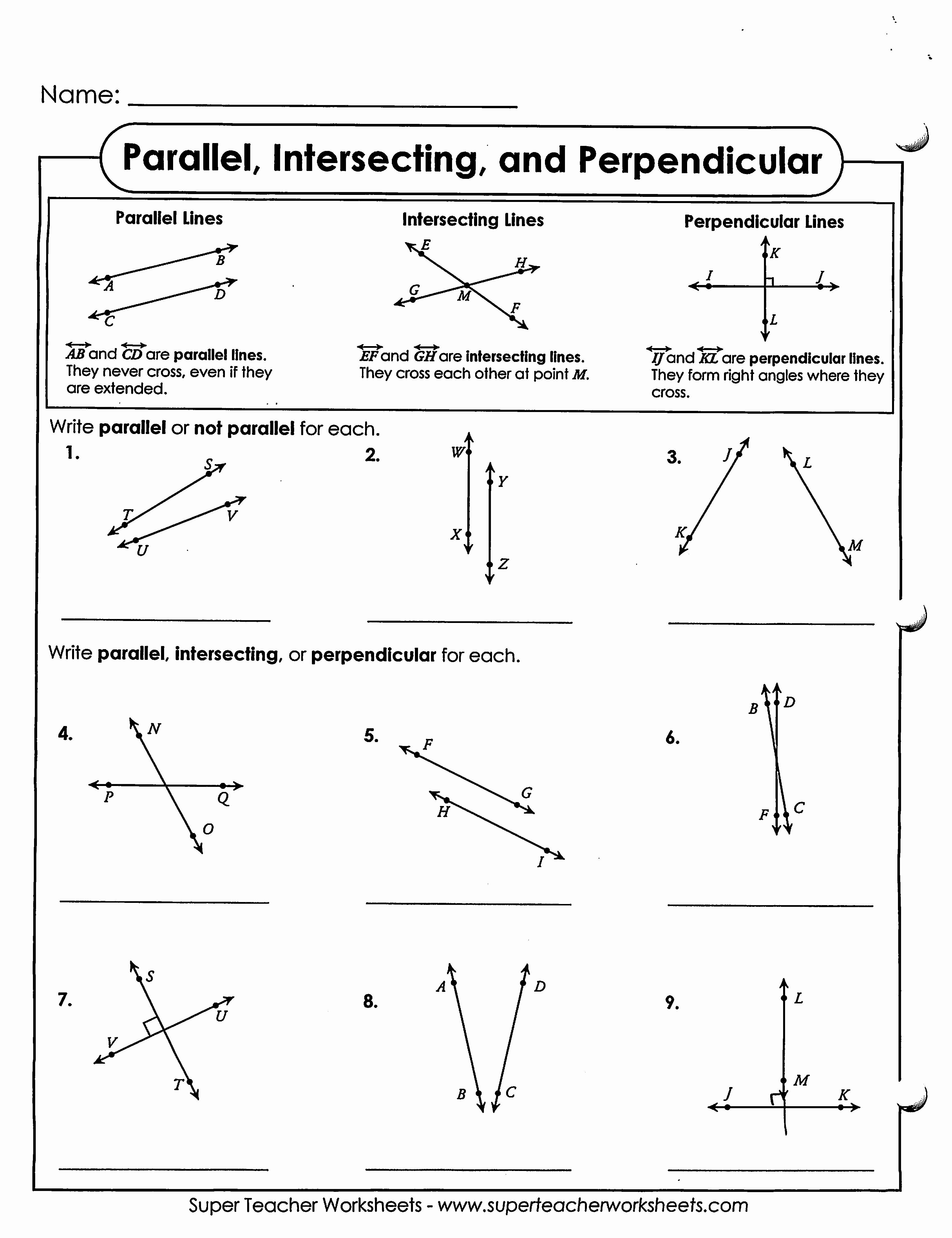
Parallel lines, for instance, are lines that never intersect, no matter how far they are extended. They maintain a constant distance from each other, creating a unique visual relationship. On the other hand, perpendicular lines intersect at a right angle (90 degrees), forming a distinctive "L" shape. The parallel & perpendicular lines worksheet helps learners recognize these distinctive features and apply them in various geometric contexts.

Find slopes for parallel and perpendicular lines.
Using the Worksheet: Tips and Tricks
When utilizing the parallel & perpendicular lines worksheet, it's important to consider the best practices for effective learning. Here are some tips to make the most of this valuable resource:
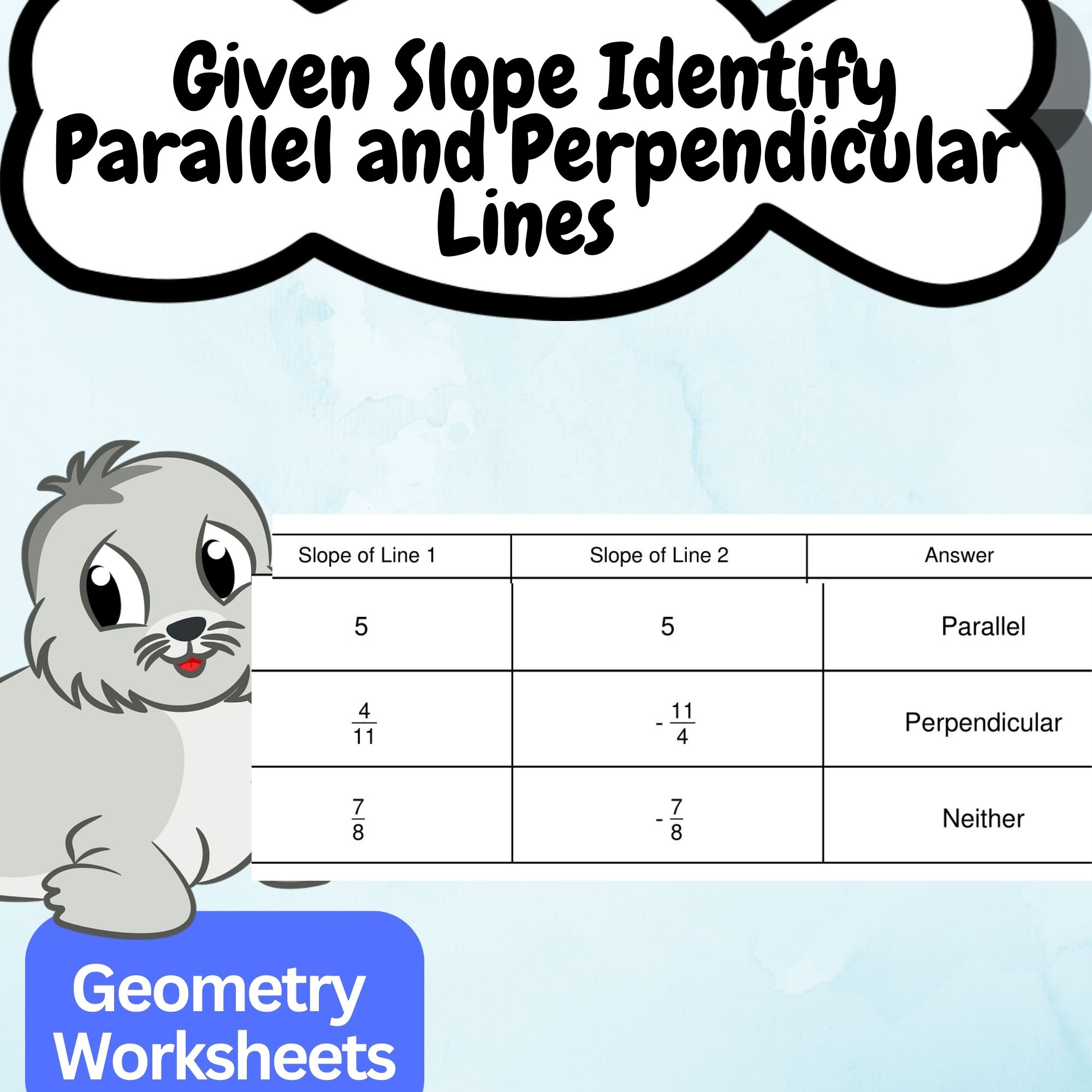
Practice slope calculations.
- Start with the Basics: Begin by familiarizing yourself with the fundamental definitions and properties of parallel and perpendicular lines. Understand the unique characteristics that define these line types.

Geometry: line types and angles.
- Practice Identification: The worksheet often includes activities that require learners to identify parallel or perpendicular lines within given diagrams. This practice helps reinforce the visual recognition of these line types.

Free worksheet: intersecting lines.
- Explore Angle Relationships: Pay attention to the angles formed by parallel and perpendicular lines. Understanding these angle relationships is crucial for advanced geometric concepts.

Geometry: angles and parallel lines.
- Progress Gradually: The worksheet typically offers a range of questions, from simple to more challenging. Work through the exercises at a comfortable pace, ensuring a solid understanding of each concept before moving on.

Angles in parallel lines practice.
- Apply Real-World Contexts: Geometry is all around us! Encourage learners to identify parallel and perpendicular lines in their surroundings, such as in architecture, nature, or everyday objects. This real-world application reinforces their understanding.

Worksheet on angles in parallel lines.
Practical Applications: Beyond the Worksheet
The skills developed through the parallel & perpendicular lines worksheet have numerous practical applications in both academic and real-world contexts. Here are some ways these concepts can be utilized:
Geometry in Architecture: Understanding parallel and perpendicular lines is fundamental in architecture. From designing buildings with precise angles to ensuring structural stability, these concepts are essential.
Art and Design: Artists and designers often rely on geometric principles to create visually appealing compositions. Knowledge of parallel and perpendicular lines can enhance their ability to create balanced and harmonious designs.
Engineering and Construction: In engineering and construction, precise measurements and angles are critical. The ability to identify parallel and perpendicular lines is crucial for ensuring accurate alignments and structures.
Navigation and Mapping: When reading maps or navigating using compasses, understanding line relationships is vital. Parallel and perpendicular lines play a significant role in determining directions and distances.
Daily Life: Even in everyday situations, geometric concepts can be applied. For instance, arranging furniture in a room to create a visually pleasing layout or measuring and cutting materials for a DIY project.
The parallel & perpendicular lines worksheet serves as an excellent foundation for exploring these practical applications. By mastering the basics, learners can apply their geometric knowledge in various real-world scenarios, making learning both engaging and relevant.
Well, there you have it! The parallel and perpendicular lines worksheet is a fantastic tool to have in your geometry toolkit. It's a fun and interactive way to grasp these fundamental concepts and their applications.
So, go ahead and give it a go! Print it out, gather your pens and rulers, and dive into the world of lines and angles. It's a great way to reinforce your understanding and build confidence in your geometry skills. Leave a comment or share your experience below; we'd love to hear how it went and any tips you might have for fellow learners!
Algebra 1: parallel and perpendicular lines.

Read also: Cat 5e vs Cat 6 Which One is Right