


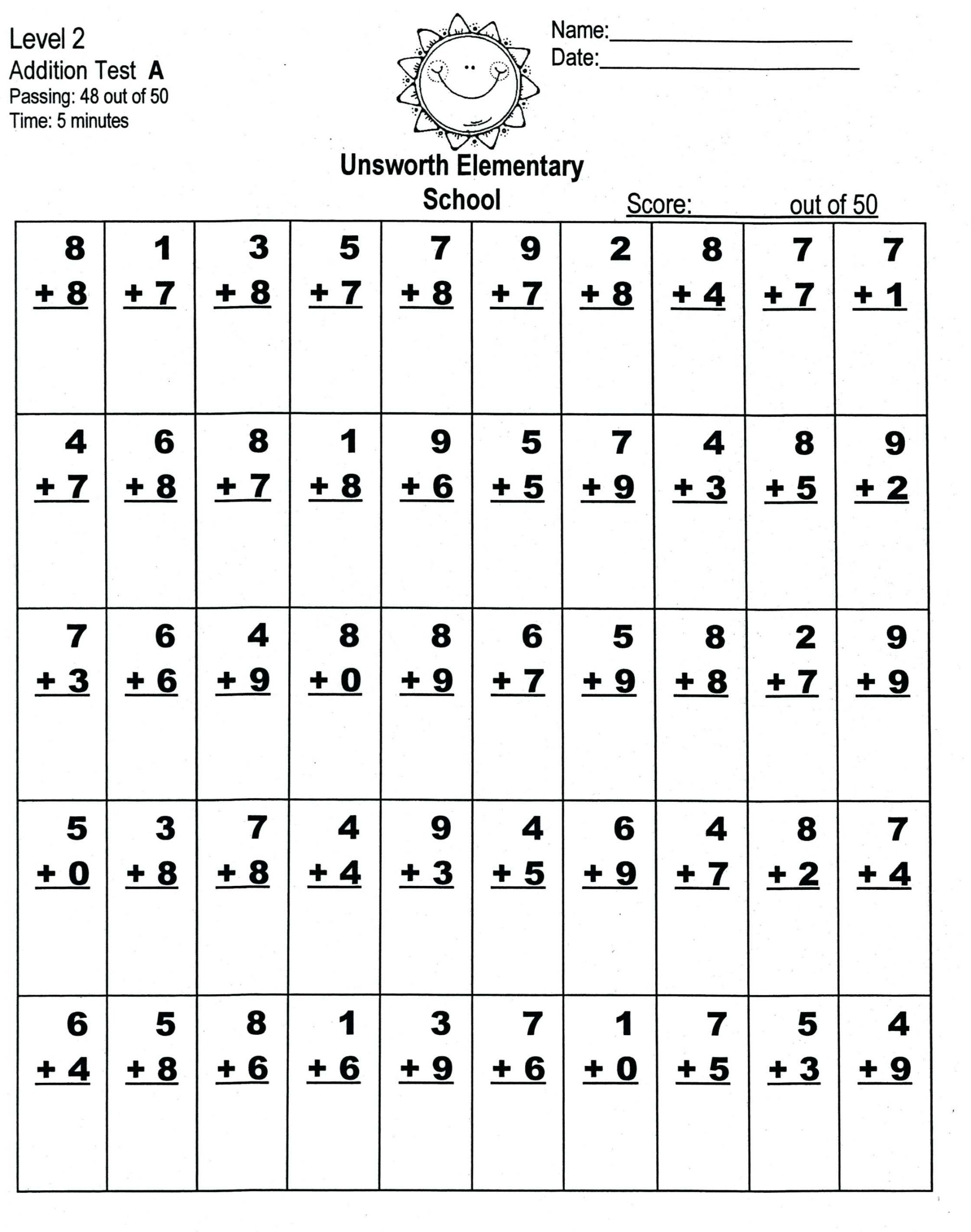
Dot To Dot Worksheets Letter Size Overview
Depression doesn’t care if you’re productive, successful, or even happy—it shows up uninvited and stays longer than you’d like. If you’ve been scrolling through cbt worksheets depression resources, you’re not alone. Here’s the thing: those worksheets aren’t just random exercises; they’re tools designed to rewire the way you think and feel. But let’s be real—not all of them are created equal, and some can feel like homework you’d rather skip.
Right now, you’re probably juggling a million thoughts, and the last thing you need is another generic solution. Depression thrives on isolation and the belief that nothing will change. But what if there’s a way to tackle it head-on, without relying on endless therapy sessions or medication? That’s where CBT worksheets come in—they’re practical, actionable, and, most importantly, they work. But only if you know how to use them effectively.
By the end of this, you’ll understand why these worksheets aren’t just another trend and how they can fit into your life without feeling like a chore. Spoiler: it’s not about doing every exercise under the sun, but about finding the ones that stick. And honestly, that’s half the battle.
The Part of Cognitive Behavioral Therapy Most People Get Wrong
Cognitive behavioral therapy, or CBT, is a highly effective treatment for depression, but many people struggle to apply its principles in their daily lives. One reason for this is that CBT requires a significant amount of self-reflection and introspection, which can be daunting for those who are new to therapy. and yes, that actually matters, because without a willingness to examine your thoughts and feelings, it's difficult to make progress. A key component of CBT is the use of worksheets, which can help individuals identify and challenge negative thought patterns. For example, **identifying cognitive distortions** is a crucial step in the CBT process, as it allows individuals to recognize when they are engaging in negative and unhelpful thinking.
Understanding Cognitive Distortions
Cognitive distortions are irrational or exaggerated thought patterns that can contribute to feelings of depression and anxiety. Examples of cognitive distortions include all-or-nothing thinking, overgeneralization, and catastrophizing. By using CBT worksheets to identify and challenge these distortions, individuals can begin to develop more balanced and realistic ways of thinking. This, in turn, can help to alleviate symptoms of depression and improve overall mental health.
Putting CBT into Practice
Using Worksheets to Track Progress
CBT worksheets can be a valuable tool for tracking progress and identifying areas for improvement. By regularly completing worksheets and reflecting on their thoughts and feelings, individuals can gain a better understanding of their mental health and develop more effective coping strategies. For instance, a simple yet effective tip is to set aside a few minutes each day to **practice self-compassion**, which can help to reduce stress and anxiety. Here is an example of what a CBT worksheet might look like:
| Thought Pattern | Cognitive Distortion | Challenge |
|---|---|---|
| I'll never be able to do this | All-or-nothing thinking | I've accomplished difficult tasks before, and I can do it again |
Overcoming Obstacles
Despite the many benefits of CBT, there are often obstacles that can prevent individuals from making progress. One common obstacle is a lack of motivation, which can make it difficult to complete worksheets and engage in other therapeutic activities. To overcome this obstacle, it's essential to **set realistic goals** and celebrate small successes along the way. By doing so, individuals can build momentum and develop a sense of accomplishment, which can help to sustain motivation and promote continued progress.
Here's What Makes the Difference
As you consider the impact of cbt worksheets depression on your mental health journey, remember that it's all about creating a ripple effect of positivity in your life. By taking control of your thoughts and emotions, you're not just improving your own well-being, but also influencing those around you. This, in turn, can lead to stronger relationships, increased productivity, and a greater sense of purpose.
Perhaps you're still wondering if these tools will truly make a difference in your life. What's holding you back from taking that first step? Let's gently dismiss that doubt: every small step counts, and the cumulative effect of using cbt worksheets depression can be profound. Don't underestimate the power of consistent practice and self-reflection.
Now, take a moment to breathe, reflect, and look forward. Invite a friend or loved one to explore these resources with you, or bookmark this page for future reference. As you move forward, remember that growth is a journey, not a destination – and every step you take brings you closer to a more balanced, fulfilling life.
Related: Free Printable Science Worksheets for Year 8 (PDF)
Let's be honest: most science worksheets for 13-year-olds are soul-crushingly boring. Diagrams of plant cells with arrows pointing to "nucleus" and "vacuole" that feel like they were designed in 1995. If you're hunting for science worksheets year 8 that don't make your kid roll their eyes into the back of their head, you already know the struggle. The textbook stuff just doesn't stick.
Here's the thing: your Year 8 student is at that weird tipping point where science gets real. They're not just learning "what happens" anymore—they're supposed to understand why. Why does a chemical reaction fizz? Why does a circuit need a complete loop? The worksheets they bring home often treat this like memorization, not discovery. And that's exactly why most kids check out by Term 2. You need material that meets them where they actually are: curious, easily distracted, and completely over being talked down to.
Look—I've got a stack of resources that actually work with the Year 8 brain. No fluff, no cutesy clip art. Just clear, slightly snarky worksheets that make kids think without making them hate you. One page on forces that uses skateboard tricks. Another on the periodic table that doesn't feel like a phone book. Keep reading and you'll find the exact kind of content that turns "ugh, science" into "okay, that's actually cool."
Let's be honest for a second: Year 8 science is where the training wheels come off. It's no longer about cute diagrams of plant cells and simple circuits. Students hit a wall where abstract concepts like chemical reactions, energy transfer, and genetics demand real cognitive muscle. The textbooks get denser, the vocabulary gets thicker, and suddenly "just reading the chapter" stops working. That's where the right kind of practice material changes everything. A good set of exercises forces a student to apply what they've read, not just nod along. It's the difference between watching someone explain a skateboard trick and actually trying it yourself. You fall, you get back up, and eventually, you land it. The real value of structured practice at this age is building the habit of thinking like a scientist, not just memorizing facts.
Why Most Year 8 Science Practice Misses the Mark
Here's what nobody tells you: many worksheets out there are glorified reading comprehension tests. They ask students to copy definitions or fill in blanks from a word bank. That's not science; that's busywork. Year 8 is the perfect age to start grappling with why something happens. A worksheet that asks "What is the product of photosynthesis?" is useless. A worksheet that gives you a graph of carbon dioxide levels in a sealed jar with a plant, and then asks you to predict what happens when you add a heat lamp? That's valuable. It forces them to connect variables, interpret data, and defend a prediction. The best resources push students toward the "I have to think about this" moment.
I've seen too many kids bored out of their minds because the material is too simple, or completely lost because it jumps straight to complex equations. The sweet spot for Year 8 involves scaffolded complexity—starting with a concrete example, then slowly removing the supports. For instance, a lesson on forces might begin by labeling arrows on a diagram of a tug-of-war, then move to calculating net force with small whole numbers, and finally ask students to design an experiment to test friction on different surfaces. That progression builds genuine competence. And let's be real: a student who can explain why a heavier object doesn't necessarily fall faster has a deeper understanding than one who can just recite Newton's laws.
What a Balanced Year 8 Science Resource Actually Looks Like
After years of reviewing curriculum materials, I've noticed the most effective practice sets share a specific structure. They don't just test one skill in isolation. They mix it up. Take a look at how a well-designed week of materials might break down across different cognitive demands:
| Skill Area | Typical Activity | Time to Complete |
|---|---|---|
| Knowledge Recall | Labeling a diagram of the periodic table groups | 10 minutes |
| Data Interpretation | Reading a results table on acid-base neutralization | 15 minutes |
| Application & Reasoning | Explaining why a metal conducts electricity better than plastic | 20 minutes |
| Experimental Design | Writing a method to test how temperature affects yeast activity | 25 minutes |
Notice how the time increases as the task gets harder. That's intentional. You can't rush genuine understanding. If a student finishes the entire set in 30 minutes, they probably skimmed the reasoning sections. That's a red flag.
The Part of science worksheets year 8 Most People Get Wrong
The biggest mistake I see is treating all practice as a one-size-fits-all assessment. Parents and even some teachers hand out a stack of sheets and expect every student to complete them identically. That's a recipe for frustration. Some kids need more repetition on balancing chemical equations; others need to move on to applying those equations to real-world reactions like rusting or combustion. Differentiation isn't just a buzzword—it's the only way to keep a curious kid engaged and a struggling kid from giving up.
Here's a practical example: When I worked with a Year 8 class on the particle model, I gave them three tiers of practice. The first tier had them drawing particles in solids, liquids, and gases. The second tier asked them to predict what happens to particle arrangement when you heat water from 20°C to 100°C. The third tier gave them a graph of temperature over time for a melting ice cube and asked them to explain the flat sections using particle theory. Every student worked on the same core concept, but at their own depth. The results were night and day. The students who usually tuned out were suddenly debating whether the particles "get bigger" or "move faster" when heated. That's the kind of engagement that actually sticks.
How to Spot a High-Quality Resource
You can tell a great worksheet from a mediocre one by the questions it asks. Look for questions that start with "Explain", "Compare", "Predict", or "Design". Avoid resources that rely heavily on "Define", "List", or "State". A good rule of thumb: if a student can answer the entire sheet by copying from a textbook paragraph, it's not teaching them anything. The best materials include a mix of closed-ended questions (to check basic knowledge) and open-ended prompts (to stretch their thinking). And they always include a worked example or a reference diagram—never assume the student remembers last week's lesson perfectly.
One Actionable Tip for Parents and Tutors
Here's a specific, non-generic tip: After your child finishes a worksheet, ask them to change one variable in the experiment and predict the new outcome. If the worksheet asks about the effect of adding acid to a base, ask them what would happen if you used a weaker acid. If it's about the speed of sound through different materials, ask them how the result would change if the material was hotter. This takes five minutes, but it forces them to apply the principle rather than just repeat the answer. It's the single most effective way to turn a passive worksheet into an active learning experience. And honestly, it's more fun than grading papers.
One Last Thing Before You Go
When you strip it all back, the reason you’re searching for better resources isn’t just about filling a lesson plan or ticking a curriculum box. It’s about the moment a student’s eyes light up because something finally clicks—when a concept they struggled with suddenly makes sense. That’s the real payoff. Every worksheet, every diagram, every carefully worded question is a small bridge between confusion and clarity. You’re not just teaching science; you’re building confidence, curiosity, and the quiet belief that hard subjects can be mastered. What if the next worksheet you choose is the one that sparks that moment?
Maybe you’re wondering if yet another printable will really make a difference—or if you have the time to sort through endless options. That hesitation is fair, but it’s also the very reason to be intentional. The right resource doesn’t add to your workload; it lifts it. A well-designed science worksheets year 8 set can turn a chaotic revision session into a focused, independent activity that actually gives you back a few minutes of your evening. You don’t need a hundred pages. You need the ones that work.
So here’s your real next step: don’t just read and move on. Bookmark this page, save the collection, or forward it to a colleague who’s wrestling with the same unit. The best teaching tools are the ones you actually use—and the ones you share. Take a few minutes now to browse the gallery of science worksheets year 8 options, and choose one that feels like a perfect fit for tomorrow’s class. Your students are ready. You’ve got this.
Related: Free Printable 2nd Grade Science Worksheets (PDF)
You've spent 45 minutes searching Pinterest, only to find worksheets that are either babyish or way too hard for your 7-year-old. Here's the thing — that frustrated scroll is costing you more than time. It's costing you those precious after-school windows when your kid is actually willing to learn. The truth is, most "free" science worksheets printable 2nd grade resources are either fluff or completely misaligned with what second graders can actually handle. And that's infuriating when all you want is something that clicks.
Right now, your second grader is at a weird sweet spot. They're past the "why is the sky blue" phase but not ready for lab reports. They need activities that feel like play but secretly teach real concepts — like cause and effect, observation, and basic classification. Look — if you hand them another word search about clouds, they'll check out. But give them a worksheet that asks them to draw what happens when you leave an ice cube in the sun? Suddenly they're scientists. That's the gap most printable packs miss entirely.
Keep reading, and I'll show you exactly how to spot the worksheets that actually hold a 7-year-old's attention — without needing a degree in curriculum design or a laminator. I've sorted through the noise so you don't have to. One or two good sheets can turn a meltdown into "can we do one more?"
If you've ever handed a second grader a worksheet and watched their eyes glaze over, you know the struggle is real. The problem isn't the science content—it's the delivery. Most printable activities for this age group fall into one of two traps: they're either flooded with text a seven-year-old can't decode or so simplistic they insult the child's intelligence. I've spent years watching teachers and parents fumble this, and here's what nobody tells you: a good second-grade science worksheet should feel more like a puzzle than a chore.
Why Most Science Printables Fail (And How to Fix It)
The biggest mistake I see is treating second graders like miniature high school students. You hand them a diagram of the water cycle with tiny labels and expect them to sit still. That's not how their brains work. At this age, kids need scaffolding that feels like play. A printable that asks them to cut out pictures of clouds and paste them in the right order will teach more about weather than any paragraph ever could. The key is matching the activity to their motor skills and attention span—which maxes out around 15 minutes for focused work.
Here's a specific tip that changed everything for me: always include a "quick win" on the page. Put one simple task at the top—circle the living things, color the solid objects—before you ask them to write or explain. That tiny success builds momentum. I've seen reluctant learners go from "I can't" to "I did it!" in under two minutes because of this trick. Second graders need to feel smart before they'll risk being wrong.
What to Look for in a Life Science Printable
When you're searching for life science materials—plants, animals, habitats—avoid anything that looks like a textbook page. The best resources use realistic clip art (not cartoonish nonsense) and ask kids to compare instead of memorize. A worksheet that says "sort these animals by how they move" will stick longer than one that says "write three facts about mammals." The sorting forces them to think, not just copy. Look for activities that involve drawing arrows, matching halves, or simple Venn diagrams. These formats let kids show understanding without needing perfect handwriting.
The Sweet Spot for Physical Science Printables
Physical science for second graders—matter, magnets, sound—is where hands-on work really shines. A worksheet that pairs with a simple experiment beats a standalone page every time. For example, a printable that asks "predict which objects will sink or float" works best after you've dropped a rock and a sponge in a bucket of water. The printable becomes a record of thinking, not a dry exercise. I recommend looking for sheets that include a small data table or checklist. Kids love checking boxes. It gives them a sense of completion that open-ended questions often lack.
Earth and Space Printables That Don't Bore
Earth science topics—seasons, rocks, day and night—are naturally fascinating to second graders, but most printables drain the wonder out. The fix is simple: use observation prompts instead of fact recall. A worksheet that asks "draw what the sky looks like at 7 AM vs 7 PM" teaches more about day length than any definition. Avoid printables that rely heavily on vocabulary matching unless the words are paired with vivid images. Kids at this age learn best when they can connect new terms to something they've actually seen or touched.
A Quick Comparison of Worksheet Formats That Actually Work
Not all printable formats are created equal. After testing dozens of varieties with actual second graders, here's what I've found holds their attention best:
| Format Type | Best For | Average Engagement Time | Teacher Prep Needed |
|---|---|---|---|
| Cut-and-paste sorts | Classification (animals, materials, states of matter) | 12-15 minutes | Scissors and glue |
| Observation journals | Plant growth, weather tracking, simple experiments | 10 minutes per entry | None beyond printing |
| Matching games (draw lines) | Vocabulary, tools, body parts | 6-8 minutes | None |
| Prediction/result tables | Sink/float, magnetic/non-magnetic, sound pitch | 15-20 minutes | Simple materials (bucket, magnet, etc.) |
The cut-and-paste sorts consistently win for engagement, but they require more prep. If you're short on time, the matching games are your best bet—they're quick, low-mess, and surprisingly effective for vocabulary retention. The key takeaway? Match the format to your available time and the child's energy level, not just the science topic.
When you finally find a resource that clicks—whether it's a science worksheets printable 2nd grade set about magnets or a simple plant observation log—pay attention to what made it work. Was it the pictures? The short instructions? The fact that it asked a question without a single right answer? That's your gold standard. Keep coming back to that format until the child outgrows it. Then, and only then, level up.
The Moment Curiosity Becomes a Habit
You have the lesson plan, the activity, and the spark of wonder. But here is what really matters: the ten minutes after the worksheet is finished. That is when a child looks up and asks, “But why does a seed need soil?” That question is the real prize. It is not about filling in blanks—it is about training a young mind to see the world as a place full of puzzles worth solving. Every time you guide a second grader through a hands-on experiment or a thoughtful prompt, you are not just teaching science. You are quietly building a person who will question, explore, and refuse to accept easy answers. That changes everything—from their next school project to the way they look at a puddle on the sidewalk.
Maybe you are wondering if you have the time or the patience to pull this off. Let me stop you right there. You do not need a lab coat or a degree in physics. You just need a willingness to let them get a little messy and a few well-designed pages to anchor their thinking. The best science lessons happen in the small, unplanned moments—and having a solid science worksheets printable 2nd grade ready gives you the confidence to let those moments unfold without panic. You are already the person who cares enough to look for better resources. Trust that instinct.
So here is your next step: bookmark this page now, or better yet, open the gallery of science worksheets printable 2nd grade options and pick one that makes you curious. Print it, set it on the kitchen counter, and let your child discover it on their own. Then watch what happens. And if a friend or fellow parent is also trying to nurture that same spark, send them this page. The more curious kids we have in this world, the better off we all are.


