




Dot To Dot Worksheets Grade 2 Overview
As a parent, I'm always on the lookout for resources to support my child's learning journey. When it comes to math, especially topics like similar figures, having the right tools can make a world of difference. That's why I've been exploring similar figures worksheets, and I must say, they're a game-changer! These worksheets, like the ones I found for identifying similar shapes, offer a practical way to reinforce concepts and build confidence.
Proportions and similar figures, a practice sheet.
Similar Figures: A Key Concept for Geometric Understanding
When it comes to geometry, the concept of similar figures is a fundamental building block. These figures, which may not be congruent shapes but share the same angles and proportional sides, are an essential part of understanding spatial relationships and scale. A similar figures worksheet is an excellent tool to help learners grasp this concept, offering a structured way to explore and compare different shapes.
Special segments in triangles, a worksheet focus.
Exploring Similarity: Worksheet Types and Skills
There are various types of worksheets available to reinforce the understanding of similar figures. Some focus on identifying and comparing shapes, while others delve into calculating scale factors or exploring the relationship between proportional sides and equal angles. These worksheets can be tailored to different age groups and skill levels, making them versatile resources for teachers and parents.
Explore similar figures with this activity.
For instance, a beginner-level worksheet might simply ask students to identify similar shapes within a set of figures, encouraging them to look for patterns and similarities. As learners progress, worksheets can introduce more complex tasks, such as calculating the scale factor between two similar triangles or determining the side lengths of a similar figure based on a given ratio.
Scale drawings, a worksheet on visual proportions.
People Also Ask: What Makes a Similar Figure Similar?
A common curiosity when exploring similar figures is understanding the defining characteristics that make two figures similar. The key lies in the relationship between their sides and angles. Similar figures have the same shape, but their sizes may differ. This means that corresponding angles in the two figures are equal, and the corresponding sides are in the same ratio match.
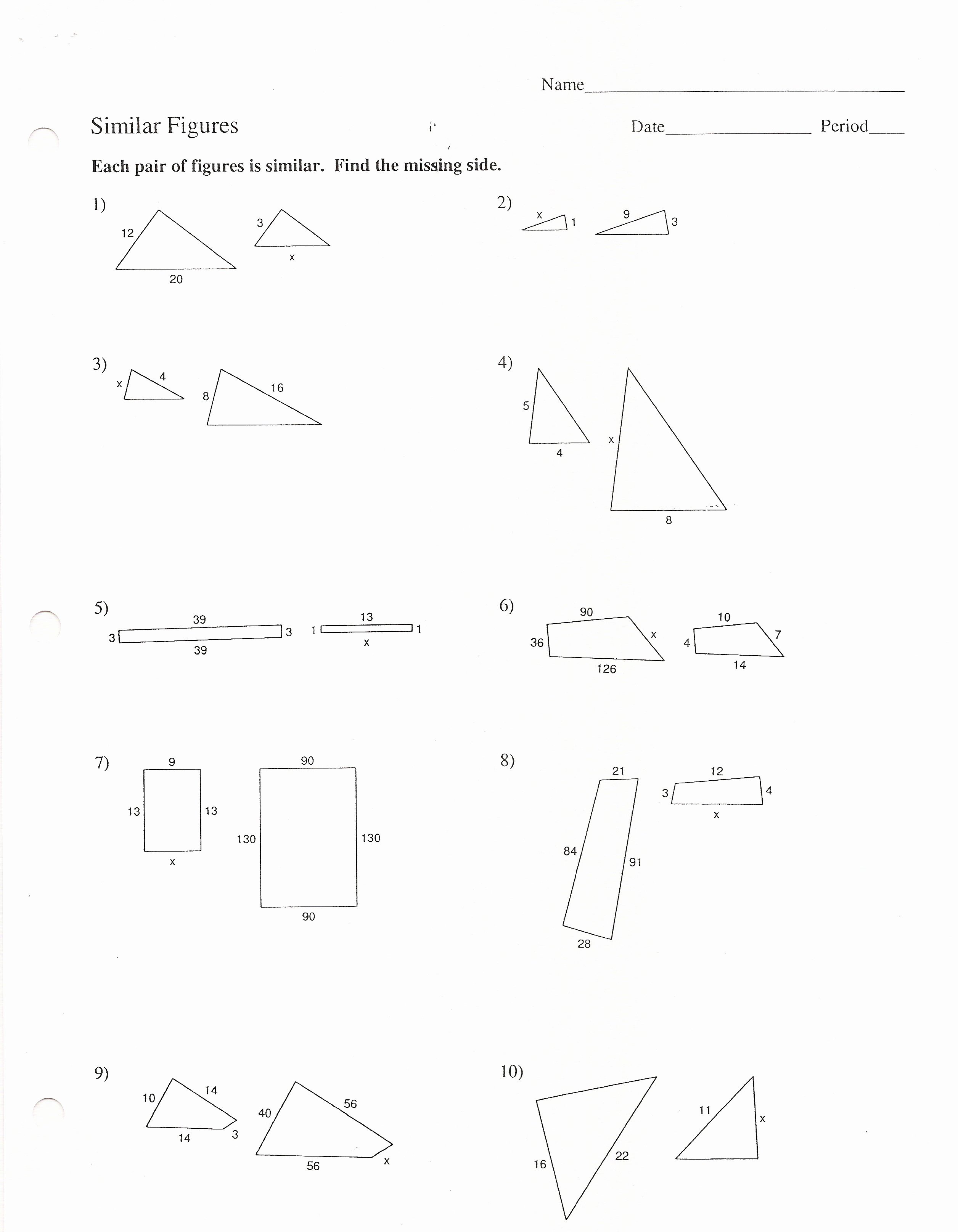
Congruence and similarity, examples and exercises.
For example, if you have two triangles, one with sides of lengths 3, 4, and 5, and another with sides of lengths 6, 8, and 10, these triangles are similar. The angles in both triangles are the same, and the ratio of the corresponding sides is 2:1, which is a constant ratio.
Congruent and similar figures, a free worksheet.
How to Use Similar Figures Worksheets: Practical Tips
Using similar figures worksheets effectively involves a few practical considerations. Firstly, ensure you have a good understanding of the concept yourself. This will help you guide learners and provide explanations when needed.
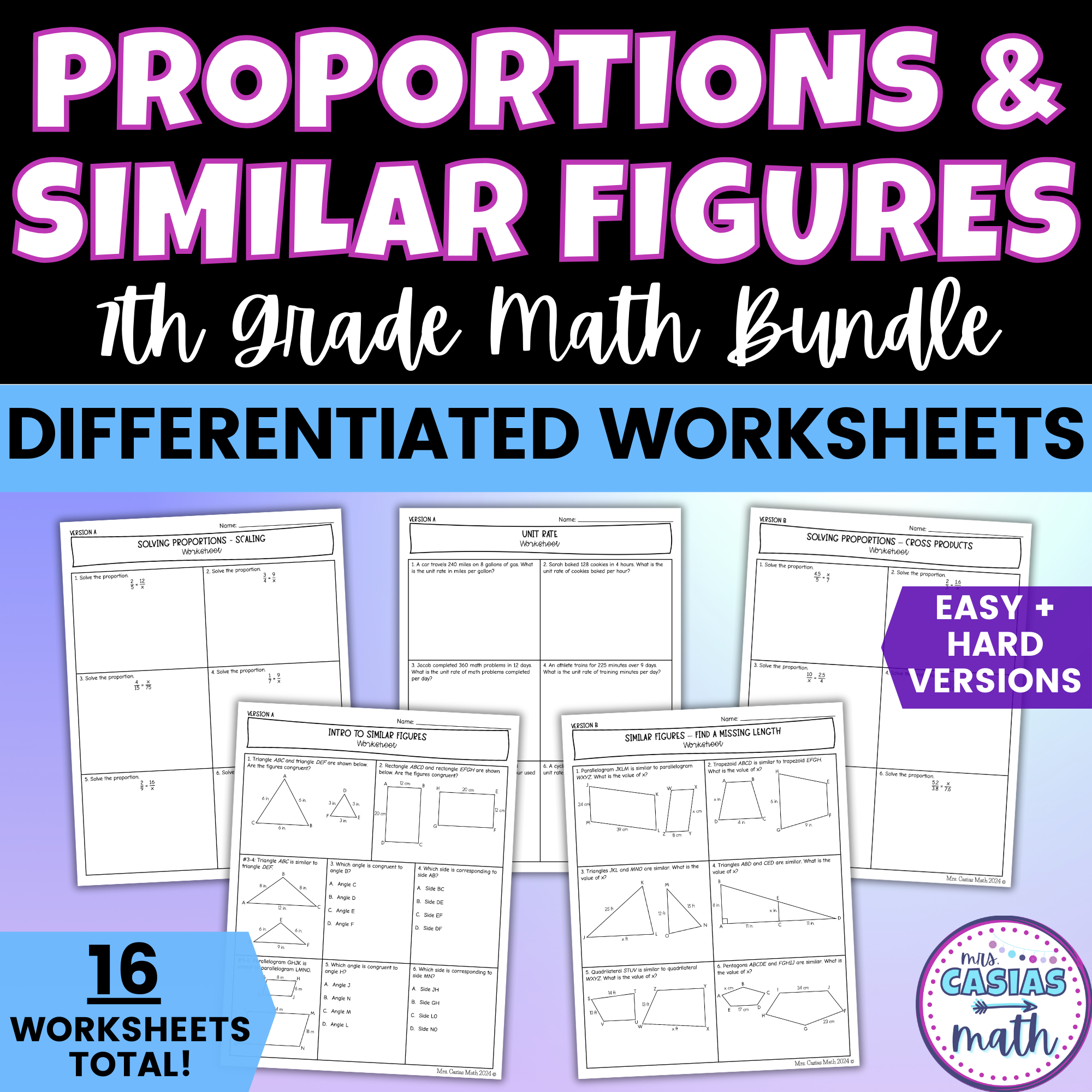
Proportions and similar figures, a 7th-grade bundle.
When printing worksheets, consider the age and skill level of your learners. Younger students may benefit from larger, simpler figures, while older learners can handle more intricate shapes and detailed calculations.
Similar triangles, a collection of worksheets.
Encourage learners to work at their own pace, especially when progressing to more challenging tasks. Provide support and guidance, but also allow them to explore and discover the relationships between similar figures independently.
Area and volume, similar shapes practice.
Building Confidence with Real-World Applications
One of the strengths of similar figures worksheets is their ability to bridge the gap between abstract concepts and real-world applications. By practicing with these worksheets, learners develop a deeper understanding of scale and proportion, which has practical implications in fields like architecture, engineering, and even art.
Volume and area, a worksheet on similar shapes.
For instance, an architect needs to understand how to scale a building design to fit a specific space. By grasping the concept of similar figures, learners can apply this knowledge to real-world scenarios, making it a valuable skill beyond the classroom.
Similar shapes, a maths worksheet on area.
Furthermore, the skills developed through these worksheets, such as identifying patterns and calculating ratios, are transferable to other mathematical concepts and subjects, providing a solid foundation for future learning.
Triangles, an informative worksheet on basics.
21 Factoring Polynomials Worksheets
Whether you're a teacher, parent, or tutor, similar figures worksheets offer a practical and engaging way to reinforce geometric concepts. By exploring the relationship between similar figures, learners develop a deeper understanding of spatial relationships and scale, setting them up for success in various mathematical and real-world contexts.
Similar figures are a fascinating way to explore geometry, and with the right resources, you can really grasp this concept. Worksheets are a great way to practice and reinforce your understanding, so why not give them a go?
Print out a similar figures worksheet, and take your time exploring the relationships between these unique shapes. It's a fun and engaging way to learn, and you might just find yourself enjoying the process! Leave a comment or share your experience below; we'd love to hear how your geometric adventures are going!
Problem-solving with similar figures, answers included.
Read also: 18 Kinder Math Worksheets for Early Learners
Related: Free Printable Reading Worksheets for KS3 Students (PDF)
If your Year 8 or Year 9 student zones out the second you mention "comprehension," you're not alone—and honestly, the problem isn't them. Most reading worksheets ks3 are so painfully generic they'd bore a librarian. They slap a dry Victorian text on a page, ask five predictable questions, and call it a day. That's not teaching. That's compliance testing.
Look, here's what nobody tells you: by Key Stage 3, kids have already decided whether they're "good" at reading or not. If they've been drowning in dull worksheets since Year 5, they've checked out. But the thing is—their reading skills are still salvageable. The difference between a kid who skims and a kid who actually digests a text isn't intelligence. It's about finding material that feels worth their attention. And the right worksheet structure? That's the scaffolding most schools skip.
What I'm going to show you isn't about more worksheets. It's about smarter ones. We're talking about tasks that make students argue with the text, not just answer it. Activities that feel more like solving a puzzle than homework. By the time you finish this, you'll know exactly how to spot a worksheet that builds real stamina versus one that just fills time. Real talk: you might even enjoy teaching it again.
Let's be honest about something: the phrase "reading worksheets ks3" often makes students groan. I get it. When I was in school, a photocopied sheet of questions felt like punishment, not progress. But here's what nobody tells you about Key Stage 3 reading resources: the best ones don't feel like worksheets at all. They feel like conversations on paper, or like someone handed you a magnifying glass and said "find the clues." The trick is separating the duds from the gems. A good comprehension task for a Year 8 student should make them argue with the text, not just answer what colour the protagonist's socks are.
Why Most KS3 Reading Resources Miss the Mark (And How to Fix It)
The biggest problem I see with typical secondary school reading materials is they treat every text the same. A newspaper article, a poem by Robert Frost, and an extract from a dystopian novel all get the same treatment: read, answer ten questions, move on. That's lazy teaching, and worse, it's boring learning. The real skill at KS3 isn't just "finding information" — it's learning to read differently depending on what's in front of you. A newspaper editorial demands you spot bias. A Shakespeare soliloquy demands you decode metaphor. A science textbook demands you follow a logical chain. When you use a targeted reading worksheets ks3 resource that actually matches the text type, students stop guessing and start thinking.
How to Spot a Worksheet That Actually Works
Here's my actionable tip: look for resources that force a comparison between two short texts. Not one long passage — two shorter ones. The magic happens when a student has to explain why one writer creates tension while another creates calm. That's real analytical thinking. A generic worksheet asks "what is the setting?" A great one asks "which text makes you feel more uneasy, and what specific word choices cause that feeling?" The difference is night and day. Pair a poem like "The Raven" with a modern horror short story extract. The contrast teaches more than either text alone.
Building Vocabulary Without the Boredom
Vocabulary work often gets tacked onto reading tasks like an afterthought — "define these five words." Yawn. Instead, I've found that embedding vocabulary into the actual comprehension questions works far better. For example, instead of asking "what does 'malevolent' mean?" ask "why does the writer use 'malevolent' instead of 'angry' to describe the character's expression?" This forces students to consider nuance. A solid reading worksheets ks3 resource should include a small table that organises word choices by effect, not just definition. Something like this:
| Word Chosen by Author | Effect on Reader | Alternative Word (Weaker) |
|---|---|---|
| lumbered | suggests heavy, clumsy, threatening movement | walked |
| whispered | creates intimacy or secrecy, forces reader to lean in | said |
| shattered | implies violence, finality, irreparable damage | broke |
This table doesn't just test recall — it builds a toolkit. Students start to see that every word choice is a deliberate move by the writer.
The One Skill KS3 Readers Actually Need (But Rarely Practise)
If I could wave a wand over every Year 7 classroom, I'd make one change: teach students to argue with the text. Most reading tasks are passive. They ask students to absorb and repeat. But the best readers are combative — they question the narrator's reliability, they spot when a writer is manipulating their emotions, they notice what's been left out. A truly useful reading resource gives students permission to disagree. Ask "do you trust this narrator? Why or why not?" instead of "what colour was the car?" That small shift changes everything. It turns reading from a chore into a detective game.
Why Inference Is the Make-or-Break Skill
Here's what I see in classrooms every year: students can quote a line from the text perfectly, but they freeze when asked "what does this suggest?" That's because most worksheets skip the bridge between quoting and inferring. They jump straight from "find the evidence" to "explain the theme" without teaching the middle step. A good resource scaffolds this. It might say: "The character 'clenches his fists.' List two possible emotions this could show. Now find a second clue in the text that confirms which one is correct." That step-by-step reasoning is gold. And it's surprisingly rare in commercial resources.
Making the Leap from School to Real Life
The final piece of the puzzle is relevance. Kids smell fake scenarios from a mile away. "Imagine you are the mayor of a town..." — no, they don't want to. But if you give them a real-world text — a tweet from a politician, a review of a video game, a recipe with deliberately misleading instructions — suddenly they're engaged. The skills are identical: identify purpose, analyse language, infer meaning. The context just makes it feel less like homework. A flexible reading resource that includes contemporary texts alongside classic extracts is worth its weight in gold. It shows students that reading analytically isn't just for English exams — it's how you spot a biased news article or a manipulative advertisement in the wild.
One Last Thing Before You Go
Think about this for a second: every single worksheet or activity you choose for your child or classroom isn’t just about filling in blanks—it’s about building a quiet, unshakable confidence. The kind of confidence that makes a reluctant reader pick up a book on their own, or a struggling student raise their hand to answer a question. That’s the real prize. The world moves fast, and literacy is the anchor that keeps a young mind steady. When you invest time in sharpening those skills, you’re not just teaching them to decode words; you’re handing them a tool to decode life itself. That matters more than any test score or deadline.
Maybe you’re thinking, “But my student is so far behind—will a few reading worksheets ks3 really make a dent?” Here’s the honest truth: it’s not about a quick fix. It’s about showing up consistently with the right material. One well-chosen worksheet that clicks can spark a chain reaction of curiosity. What if today’s lesson is the one that finally clicks? Don’t let the fear of “not enough time” or “not the perfect resource” stop you from starting. Small, deliberate steps always beat waiting for the perfect moment.
So here’s my invitation: don’t just close this tab and move on. Bookmark this page. Save the reading worksheets ks3 you like best into a folder you can return to next week. Better yet, share the link with a fellow parent, tutor, or teacher who’s in the same boat. The best resources grow in value when they’re passed around. Go ahead—browse the gallery once more, pick one worksheet, and try it today. That’s all it takes to turn a good intention into a real difference.
Related: Free Printable Coloring Worksheets by Huntrix (PDF)
Ever felt like your kids are glued to screens, and you’re desperate for something—anything—to spark their creativity offline? Here’s the thing: coloring worksheets huntrix might just be the unsung hero you’ve been overlooking. It’s not just about filling in lines; it’s about handing them a tool to focus, unwind, and express themselves without needing Wi-Fi or batteries.
Right now, as parents and educators, we’re all juggling too much. Kids are overstimulated, attention spans are shrinking, and finding activities that actually engage them feels like a wild goose chase. But what if the solution was simpler than you thought? What if it’s been sitting in plain sight, waiting for you to rediscover it?
Stick around, and you’ll see why these aren’t just sheets of paper—they’re mini-adventures waiting to happen. Honestly, by the end of this, you’ll be wondering why you didn’t dive into this sooner. (And yeah, I went a bit off-topic there, but look—sometimes the best ideas come from unexpected places, right?) Let’s get into it.
The Part of coloring worksheets huntrix Most People Get Wrong
When it comes to coloring worksheets, many of us assume that it's all about the fun and creativity, but **the therapeutic benefits** are often overlooked. As someone who has spent years working with children and adults alike, I can attest that coloring worksheets can be a powerful tool for relaxation and stress relief. But here's what nobody tells you: it's not just about the act of coloring itself, but also about the process of choosing the right colors and patterns. and yes, that actually matters because it can affect the overall experience and outcome.
Understanding the Importance of Color Choice
Color choice is a critical aspect of coloring worksheets, and it's essential to understand how different colors can evoke different emotions and moods. For instance, **calming colors** like blue and green can help create a sense of tranquility, while **vibrant colors** like red and orange can stimulate energy and creativity. By choosing the right colors, individuals can tailor their coloring experience to suit their needs and preferences.
Exploring Different Types of Coloring Worksheets
There are various types of coloring worksheets available, each with its unique characteristics and benefits. From **mandalas** to **geometric patterns**, the options are endless, and it's essential to explore different types to find what works best for you. For example, if you're looking for a more meditative experience, you might prefer **intricate designs**, while **simple shapes** might be more suitable for children or those with limited attention span.
Maximizing the Benefits of Coloring Worksheets
Practical Tips for Effective Coloring
To get the most out of coloring worksheets, it's crucial to have a few practical tips up your sleeve. One actionable tip is to start with **simple exercises**, such as coloring within the lines or creating basic patterns, and gradually move on to more complex designs. This will help build confidence and fine-tune your coloring skills. Additionally, consider using **high-quality materials**, like colored pencils or markers, to enhance the overall experience and make it more enjoyable. With the right approach and mindset, coloring worksheets can be a valuable tool for relaxation, creativity, and self-expression, whether you're using coloring worksheets huntrix or other types of coloring materials.
Your Creative Journey Starts Now
In the grand tapestry of life, creativity is the thread that adds color, texture, and meaning. Whether you're a parent looking to engage your child, an educator seeking new tools, or simply someone who craves a moment of calm, coloring worksheets huntrix are more than just pages—they're gateways to imagination, focus, and joy. By embracing this simple yet powerful activity, you're not just filling in lines; you're nurturing a mindset that values creativity, patience, and self-expression. Isn’t that worth holding onto?
You might wonder if coloring is really worth the time or effort. Let me assure you: it is. Even in our fast-paced world, taking a few minutes to color can reset your mind, spark inspiration, or create a cherished memory with someone you love. It’s not about perfection—it’s about the process. So, don’t let doubt hold you back. Dive in, and let the colors guide you.
Ready to explore? Browse our gallery of coloring worksheets huntrix and find the designs that speak to you. Bookmark this page for future inspiration, or share it with a friend who could use a creative boost. Your next masterpiece is just a click away—and the journey is all yours to enjoy.


